

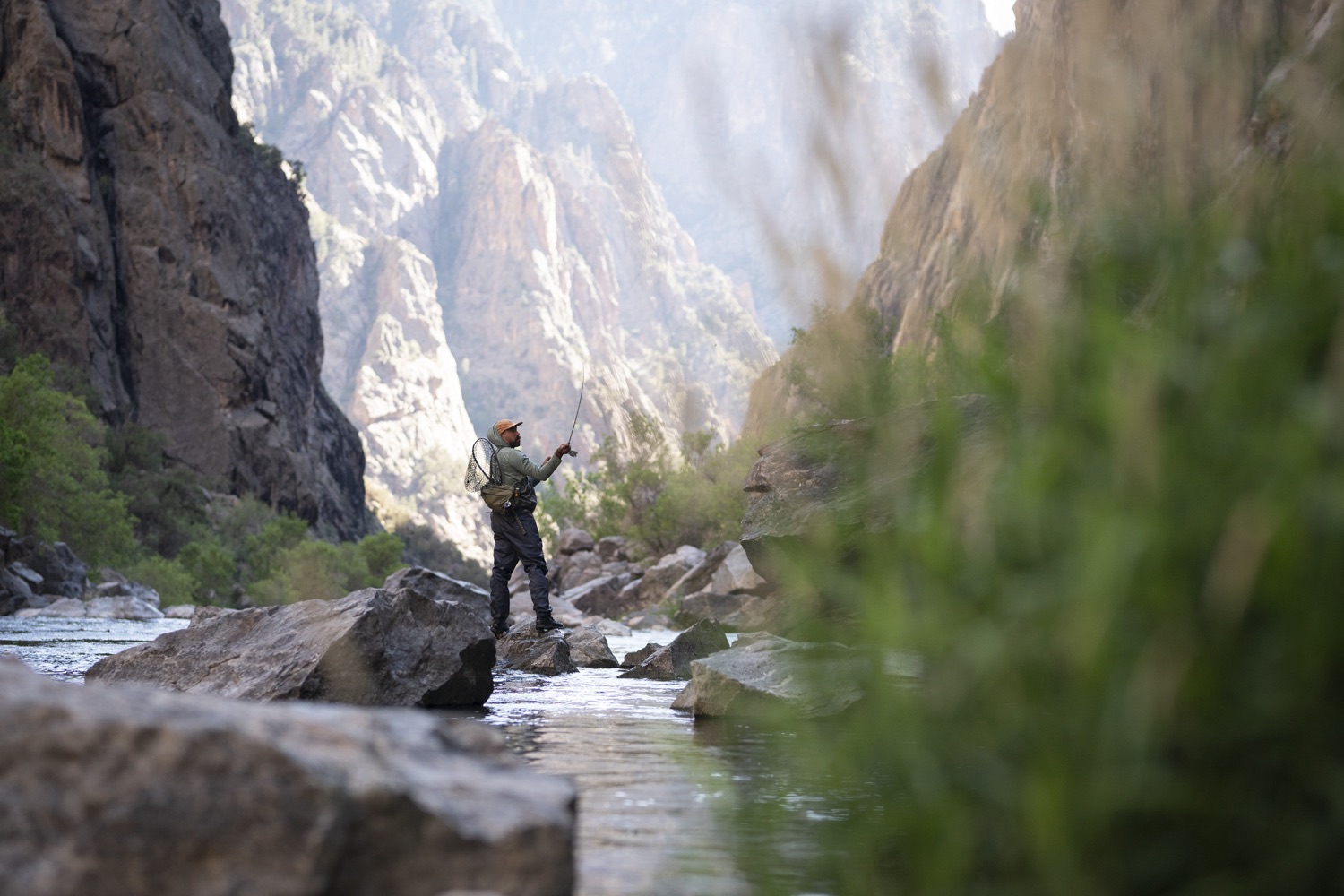
Colorado Stream Access
Written by Andrew Becker and Tom Bie Photos by Rob Hammer
Take any Colorado stream-access battle that has taken place this century, and a small, relatively unknown but politically connected nonprofit has likely played a role.
The secretive Creekside Coalition has fought for much of the past thirty years to keep stream-access laws in Colorado from becoming anything like those in Montana, where the public is allowed to recreate in its rivers and streams up to the high-water mark. Public records describe the group’s ongoing mission: “To protect historic river property rights and associated habitat in Colorado against threats that may arise in the state legislature, the courts, by ballot initiative, or from any other source.” Creekside has proven adept in achieving this goal.
The group has cultivated political connections, fought ballot initiatives (while developing its own), hired lobbyists and lawyers to monitor bills, and pushed bans on floating over private streambeds without the owner’s permission, all in the name of limiting access to state-owned waters. Creekside has not flinched in its support of the most restrictive stream-access laws in the nation, or in its effort to keep anglers from wading and fishing in state waters that flow over private land.
Colorado’s legal landscape on river access is a messy jumble of differing opinions and interpretations. Ask ten legal experts on the topic and you may receive ten wildly different answers, with each using similar threads of the law. These threads include:
1) Most major rivers in the US are legally defined as either “navigable” or “non-navigable.” According to an August 2025 Issue Brief by Alexa Kelly, a Senior Research Analyst for the Colorado Legislative Council, the Colorado Supreme Court, in 1913, “declared that all streams within the limits of the state are non-navigable. The court, however, did not expand on what test or law it relied on to make this determination.”
2) Colorado is the only state in the nation that does not guarantee the public’s right to float on the surface of a river.
3) Colorado is one of only a few US states that does not allow an angler to stand on the streambed of a navigable river flowing over private property, without first getting permission from the landowner. (Again, because navigable rivers, inexplicably, do not legally exist in Colorado.) This was the basis for angler Roger Hill’s 12-year attempt to legally wade-fish the upper Arkansas. He lost.
The linchpin legal finding that cemented Colorado’s status as the most extreme access-outlier in America is the ill-famed 1979 People v. Emmert case, in which the state’s high court time-warped a legal concept from the 13th century to rule that whoever owns the surface of the ground has exclusive right to everything above it, “subject to the right of flight of aircraft.”
So, if you’re wondering how any sane Colorado landowners can actually believe they own the river bottom, the water flowing over it, the trout swimming through it, and everything above it except planes, it’s because the State of Colorado has told them they do.
Creekside Coalition is currently scrambling to amass war chests and political clout ahead of Colorado’s 2026 legislative session, as some lawmakers appear ready to clarify who gets to enjoy Colorado’s roughly 100,000 miles of waterways. The major question: Whether a tenuous detente between landowners and boaters over the right to float should be codified in state law or left as is, a mess to be sorted out on an ad hoc basis, where the only real winners are attorneys’ billable hours.
“Creekside’s Position” is plainly stated on its website. The first sentence reads: “Simply put, we don’t think anything needs to change.” But there was apparently one thing the coalition thought needed to change: Its type of IRS tax-exempt nonprofit.
Since at least 2009, the Creekside Coalition has operated as a 501(c)(6), “for groups that promote the common business interests of their members” according to the IRS. This year, the coalition changed its status to a 501(c)(4), a “social welfare organization.” This designation, according to the IRS website, “must be operated exclusively to promote social welfare” and “must operate primarily to further the common good and general welfare of the people of the community.” Augusta National would seem a more likely candidate.
“Riparian conservation” feels a bit like a red herring in this public-facing statement. Individuals working for or donating to any of the countless U.S.-based conservation groups are generally delighted to attach their names to the cause. But part of the draw for Creekside, as with any “dark money” nonprofit, is that it isn’t required to publicly disclose its donors.
In gearing up for a pending skirmish, Creekside this fall sent out a fundraising letter with a dire warning: “Our team of lobbyists has received indications that legislators from mountain and rural districts, working with the Colorado Stream Access Coalition (CSAC), are preparing to introduce a bill in the January 2026 General Assembly that would allow the public to access privately owned streambeds and riverbanks,” warns the Sept. 16, 2025 letter, a copy of which was shared with The Drake. “If this effort succeeds, riparian landowners risk losing ownership and control of properties they steward and cherish.”
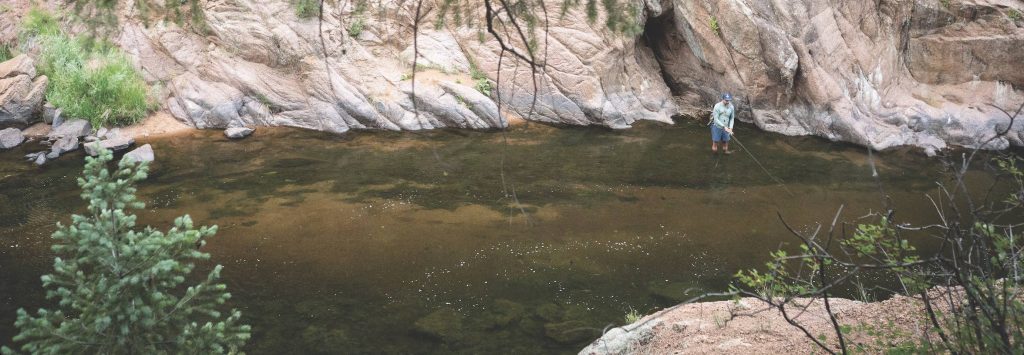
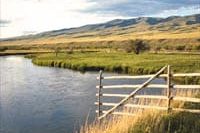
On some Colorado rivers, avoiding the streambed is not really an option.
Greg Felt, a co-owner of Ark Anglers, which operates a guide service and fly shops in Buena Vista and Salida, was surprised to get the letter, considering his history with Creekside.
Felt first tussled with the group in 2002, when a private ranch along Colorado’s Lake Fork of the Gunnison sued the rafting company Cannibal Outdoors for civil trespass. The ranch was seeking an injunction to forbid floating the Lake Fork. Then, in 2010, Felt and Creekside’s president were both appointees to then-Gov. Bill Ritter’s River Dispute Resolution Task Force. (They were two of seventeen stakeholders tasked with finding ways to ease tensions between landowners and the public.) Then, more than two decades later, Felt received the letter.
“I’m stunned they’re asking me for money now when it was an existential battle for us back then,” Felt said of his first experience with Creekside. “Then again,” he adds, “to codify the status quo is scary to people. It creates a lot of division.”
That division showed up in mid-October, when the newly formed Colorado Stream Access Coalition splintered over strategy and timing. One faction, composed of American Whitewater (AW) and other boating organizations, has since formed its own group: Responsible River Recreation Alliance, which aims to back a bill in early 2026 that firms up the right to float but does not directly address the right of anglers to wade. The AW-backed bill would, however, address safety issues for boaters, allowing incidental contact. “If you have to chase down a kayak and then get back in it, you are going to have contact with the bed and banks,” said AW Stewardship Director Hattie Johnson. “If there’s a dam you need to portage, or if there’s a downed tree you need to portage, you’ll be able to do that.”
The rest of the Colorado Stream Access Coalition (CSAC), including groups like Backcountry Hunters and Anglers and the American Packrafting Association, along with brands like Big Agnes, NRS, Rep Your Water, and Cheeky, intend to play the long game in establishing the right to wade. CSAC is currently focusing on education instead of legislation, including the release of a short educational film, Common Waters.
“The vast majority of people support expanding stream access,” said Don Holmstrom of Backcountry Hunters and Anglers Colorado chapter. “The worst outcome is that nothing happens.”
A new nonprofit with political ties and an eye on property rights is the Colorado Water Conservation Alliance. Formed in July—also as a 501(c)(4)—the group is represented by Thomas “Trey” Rogers III, a Colorado attorney who served as chief legal counsel to former Governor Bill Ritter. Like Creekside, which it is aligned with, the Alliance lists no names on its website and isn’t required to divulge its donors. Rogers, who owns riverfront property on the Arkansas River, won’t say who its members are.
“I get the other side of this,” Rogers said. “Stream access is all over the board in the Western U.S. —and why is it different everywhere? But this country is founded on private property rights, and the right to be left alone.”
The Alliance and Creekside both rail against “out-of-state interests,” using their respective websites to claim that non-Coloradans are responsible for “hurting rural communities” and “taking ownership of your stream beds.”
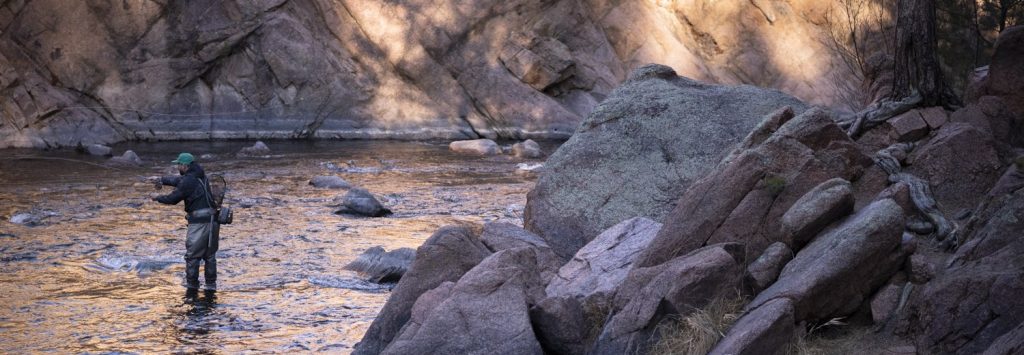
Finding solitude on Colorado rivers might take some work.
Both these claims are true, just not in the way that they mean them. Prior to Roger Hill, two of the biggest stream-access cases in recent decades took place along the Lake Fork of the Gunnison in 2001, and on the Taylor River in 2010. Neither landowner was from Colorado.
In April 2002, amidst the Lake Fork dispute, Creekside Coalition tried to amend a bill in the state legislature that would’ve made it illegal to hunt or fish while floating past private land. Colorado River Outfitters Association and the Colorado chapter of TU got the amendment removed from the bill.
As for the Taylor River case, Lewis Shaw was chairman of the Dallas-based Jackson-Shaw development company that bought 2,100 riverside acres, sliced it into 26 parcels, and told two longtime Colorado rafting companies that they could no longer float past his property because doing so was akin to “someone walking across my front lawn.”
In March 2010, a record 24 proposed ballot initiatives on stream-access were filed with the state’s Legislative Council. Twenty of them came from the Creekside Coalition.
The Coalition raised more than a million dollars between 2004 and 2023, according to records filed with the IRS. Its past board directors have included the son of a former Boston Celtic who played for NBA Hall of Fame Coach Red Auerbach; a one-time owner of the private Rocky Mountain Angling Club; and the late father of Neil Gorsuch, years before Gorsuch became a U.S. Supreme Court Justice.
John Leede, who’s been Creekside’s board president for the past twenty years, declined an interview request. His father, Ed Leede, was a former NBA player and Dartmouth College basketball standout whose family business, Leede Operating Company, works oil and gas operations in New Mexico, Oklahoma and West Texas.
Since forming in 1994 in response to a ballot initiative to expand Colorado stream access, Creekside has spun a wide web of political friends. Christopher Paulson, a former Colorado House Majority Leader, represented Creekside for years as its registered agent. Paulson is married to Cinamon Watson, a former deputy campaign manager for Gov. Bill Owens, and CEO of the Common Sense Institute, which published a report in September arguing against expanding stream access. (Neither Paulson nor Watson responded to interview requests.)
Creekside recently hired Mary Marchun, a water policy expert who worked for the Department of Natural Resources as its legislative liaison. (Creekside had paid her firm, The Capstone Group, $40,000 through October 2025, Colorado Secretary of State records show. Marchun declined an interview.)
James R. Ford, a southwest Colorado rancher and a Creekside donor, said he doesn’t know why people want Colorado to be like other states, or why the law needs to change. “The floating part of it, over the last twenty years, has solved itself,” said Ford, who also served on the 2010 dispute resolution task force. “I’ve not heard of anybody recently that has been denied the ability to float. But fishing really changes the dynamic.”
The Creekside Coalition briefly dissolved in July 2024, the year after a Colorado Supreme Court ruling shut down the Hill case. But it re-formed in June when members caught wind of the new legislative effort. As summer wound down, the renewed Creekside Coalition sprang into action, hiring a new executive director who signed the fundraising letter: Brenden Stucky, the founder of RareWaters, a Colorado-based tech company launched in 2020 to broker access to private waters. RareWaters expanded to Wyoming and other states while raising $3.4 million, according to Stucky’s LinkedIn profile.
Before selling RareWaters last summer to Infinite Outdoors, Stucky and his former CEO RJ Hosking said in interview after interview that they were proponents of public water. “Brenden and I and the team at RareWaters, we’re not anti-public water by any means,” Hosking said in a 2024 interview with The Drake. “We’re huge fans of Backcountry Hunters and Anglers.” (Stucky did not respond to multiple interview requests.)
“If this legislation passes, it will be the biggest inverse condemnation ever noted in the state of Colorado,” said long-time Creekside board member and attorney John Woodward. “It will cost billions in damages for the depreciation of private property rights. We decided we better keep paying attention.”
Amy Beatie, former Colorado Deputy Attorney General for Natural Resources, doesn’t share this doomsday view. “We need to answer the question, whether the answer is what everyone likes or not,” said Beatie. “Because the uncertainty is dangerous, and it’s only going to get worse. Historic ranches, that have been accustomed to people floating through their property, are changing hands. And people are doing dumb things—barbed wire, low bridges, weapons—because the law is ambiguous, and that ambiguity serves the landowners, not the floaters.”




Tom Bie is the founder, editor, and publisher of The Drake. He started the magazine in 1998 as an annual newsprint publication based in Jackson Hole, Wyoming. He then moved it to Steamboat, Colorado (1999), Boulder, Colorado (2001), and San Clemente, California (2004), as he took jobs as managing editor at Paddler, Senior Editor at Skiing, and Editor-in-Chief at Powder, respectively. Tom and The Drake are now both based in Denver, Colorado, where The Drake is finally all grows up(Swingers, 1996) to a quarterly magazine.
-
Tom Bie
-
Tom Bie
-
Tom Bie
-
Tom Bie
-
Tom Bie
-
Tom Bie
-
Tom Bie
-
Tom Bie
-
Tom Bie
-
Tom Bie
-
Tom Bie
-
Tom Bie
-
Tom Bie
-
Tom Bie
-
Tom Bie
-
Tom Bie
-
Tom Bie
-
Tom Bie
-
Tom Bie
-
Tom Bie
-
Tom Bie
-
Tom Bie
-
Tom Bie
-
Tom Bie
-
Tom Bie
-
Tom Bie
-
Tom Bie
-
Tom Bie
-
Tom Bie
-
Tom Bie
-
Tom Bie
-
Tom Bie
-
Tom Bie
-
Tom Bie
-
Tom Bie
-
Tom Bie
-
Tom Bie
-
Tom Bie
-
Tom Bie
-
Tom Bie
-
Tom Bie
-
Tom Bie
-
Tom Bie
-
Tom Bie
-
Tom Bie
-
Tom Bie
-
Tom Bie
-
Tom Bie
-
Tom Bie
-
Tom Bie
-
Tom Bie
-
Tom Bie
-
Tom Bie
-
Tom Bie
-
Tom Bie
-
Tom Bie
-
Tom Bie
-
Tom Bie
-
Tom Bie
-
Tom Bie
-
Tom Bie
-
Tom Bie
-
Tom Bie
-
Tom Bie
-
Tom Bie
-
Tom Bie
-
Tom Bie
-
Tom Bie
-
Tom Bie
-
Tom Bie
-
Tom Bie
-
Tom Bie
-
Tom Bie
-
Tom Bie
-
Tom Bie
-
Tom Bie
-
Tom Bie
-
Tom Bie
-
Tom Bie
-
Tom Bie
-
Tom Bie
-
Tom Bie
-
Tom Bie
-
Tom Bie
-
Tom Bie
-
Tom Bie
-
Tom Bie
-
Tom Bie
-
Tom Bie
-
Tom Bie
-
Tom Bie
-
Tom Bie
-
Tom Bie
-
Tom Bie
-
Tom Bie
-
Tom Bie
-
Tom Bie
-
Tom Bie
-
Tom Bie
-
Tom Bie
-
Tom Bie
-
Tom Bie
-
Tom Bie
-
Tom Bie
-
Tom Bie
-
Tom Bie
-
Tom Bie
-
Tom Bie
-
Tom Bie
-
Tom Bie
-
Tom Bie
-
Tom Bie
-
Tom Bie
-
Tom Bie
-
Tom Bie
-
Tom Bie
-
Tom Bie
-
Tom Bie
-
Tom Bie
-
Tom Bie
-
Tom Bie
-
Tom Bie
-
Tom Bie
-
Tom Bie
-
Tom Bie
-
Tom Bie
-
Tom Bie
-
Tom Bie
-
Tom Bie
-
Tom Bie
-
Tom Bie
-
Tom Bie
-
Tom Bie
-
Tom Bie
-
Tom Bie
-
Tom Bie
-
Tom Bie
-
Tom Bie
-
Tom Bie
-
Tom Bie
-
Tom Bie
-
Tom Bie
-
Tom Bie
-
Tom Bie
-
Tom Bie
-
Tom Bie
-
Tom Bie
-
Tom Bie
-
Tom Bie
-
Tom Bie
-
Tom Bie
-
Tom Bie
-
Tom Bie
-
Tom Bie
-
Tom Bie
-
Tom Bie
-
Tom Bie
-
Tom Bie
-
Tom Bie
-
Tom Bie
-
Tom Bie
-
Tom Bie
-
Tom Bie
-
Tom Bie
-
Tom Bie
-
Tom Bie
-
Tom Bie
-
Tom Bie
-
Tom Bie
-
Tom Bie
-
Tom Bie
-
Tom Bie
-
Tom Bie
-
Tom Bie
-
Tom Bie
-
Tom Bie
-
Tom Bie
-
Tom Bie
-
Tom Bie
-
Tom Bie
-
Tom Bie
-
Tom Bie
-
Tom Bie
-
Tom Bie
-
Tom Bie
-
Tom Bie
-
Tom Bie
-
Tom Bie
-
Tom Bie
-
Tom Bie
-
Tom Bie
-
Tom Bie
-
Tom Bie
-
Tom Bie
-
Tom Bie
-
Tom Bie
-
Tom Bie
-
Tom Bie
-
Tom Bie
-
Tom Bie
-
Tom Bie
-
Tom Bie
-
Tom Bie
-
Tom Bie
-
Tom Bie
-
Tom Bie
-
Tom Bie
-
Tom Bie
-
Tom Bie
-
Tom Bie
-
Tom Bie
-
Tom Bie
-
Tom Bie
-
Tom Bie
-
Tom Bie
-
Tom Bie
-
Tom Bie
-
Tom Bie
-
Tom Bie
-
Tom Bie
-
Tom Bie
-
Tom Bie
-
Tom Bie
-
Tom Bie
-
Tom Bie
-
Tom Bie
-
Tom Bie
-
Tom Bie
-
Tom Bie
-
Tom Bie
-
Tom Bie
-
Tom Bie
-
Tom Bie
-
Tom Bie
-
Tom Bie
-
Tom Bie
-
Tom Bie
-
Tom Bie
-
Tom Bie
-
Tom Bie
-
Tom Bie
-
Tom Bie
-
Tom Bie
-
Tom Bie
-
Tom Bie
-
Tom Bie
-
Tom Bie
-
Tom Bie
-
Tom Bie
-
Tom Bie
-
Tom Bie
-
Tom Bie
-
Tom Bie
-
Tom Bie
-
Tom Bie
-
Tom Bie
-
Tom Bie
-
Tom Bie
-
Tom Bie
-
Tom Bie
-
Tom Bie
-
Tom Bie
-
Tom Bie
-
Tom Bie
-
Tom Bie
-
Tom Bie
-
Tom Bie
-
Tom Bie
-
Tom Bie
-
Tom Bie
-
Tom Bie
-
Tom Bie
-
Tom Bie
-
Tom Bie
-
Tom Bie
-
Tom Bie
-
Tom Bie
-
Tom Bie
-
Tom Bie
-
Tom Bie
-
Tom Bie
-
Tom Bie
-
Tom Bie
-
Tom Bie
-
Tom Bie
-
Tom Bie
-
Tom Bie
-
Tom Bie
-
Tom Bie
-
Tom Bie
-
Tom Bie
-
Tom Bie
-
Tom Bie
-
Tom Bie
-
Tom Bie
-
Tom Bie
-
Tom Bie
-
Tom Bie
-
Tom Bie
-
Tom Bie
-
Tom Bie
-
Tom Bie
-
Tom Bie
-
Tom Bie
-
Tom Bie
-
Tom Bie
-
Tom Bie
-
Tom Bie
-
Tom Bie
-
Tom Bie
-
Tom Bie
-
Tom Bie
-
Tom Bie
-
Tom Bie
-
Tom Bie
-
Tom Bie
-
Tom Bie
-
Tom Bie
-
Tom Bie
-
Tom Bie
-
Tom Bie
-
Tom Bie
-
Tom Bie
-
Tom Bie
-
Tom Bie
-
Tom Bie
-
Tom Bie
-
Tom Bie
-
Tom Bie
-
Tom Bie
-
Tom Bie
-
Tom Bie
-
Tom Bie
-
Tom Bie
-
Tom Bie
-
Tom Bie
-
Tom Bie
-
Tom Bie
-
Tom Bie
-
Tom Bie
-
Tom Bie
-
Tom Bie
-
Tom Bie
-
Tom Bie
-
Tom Bie
-
Tom Bie
-
Tom Bie
-
Tom Bie
-
Tom Bie
-
Tom Bie
-
Tom Bie
-
Tom Bie
-
Tom Bie
-
Tom Bie
-
Tom Bie
-
Tom Bie
-
Tom Bie
-
Tom Bie
-
Tom Bie
-
Tom Bie
-
Tom Bie
-
Tom Bie
-
Tom Bie
-
Tom Bie
-
Tom Bie
-
Tom Bie
-
Tom Bie
-
Tom Bie
-
Tom Bie
-
Tom Bie
-
Tom Bie
-
Tom Bie
-
Tom Bie
-
Tom Bie
-
Tom Bie
-
Tom Bie
-
Tom Bie
-
Tom Bie
-
Tom Bie
-
Tom Bie
-
Tom Bie
-
Tom Bie
-
Tom Bie
-
Tom Bie
-
Tom Bie
-
Tom Bie
-
Tom Bie
-
Tom Bie
-
Tom Bie
-
Tom Bie
-
Tom Bie
-
Tom Bie
-
Tom Bie
-
Tom Bie
-
Tom Bie
-
Tom Bie
-
Tom Bie
-
Tom Bie
-
Tom Bie
-
Tom Bie
-
Tom Bie
-
Tom Bie
-
Tom Bie
-
Tom Bie
-
Tom Bie
-
Tom Bie
-
Tom Bie
-
Tom Bie
-
Tom Bie
-
Tom Bie
-
Tom Bie
-
Tom Bie
-
Tom Bie
-
Tom Bie
-
Tom Bie
-
Tom Bie
-
Tom Bie
-
Tom Bie
-
Tom Bie
-
Tom Bie
-
Tom Bie
-
Tom Bie
-
Tom Bie
-
Tom Bie
-
Tom Bie
-
Tom Bie
-
Tom Bie
-
Tom Bie
-
Tom Bie
-
Tom Bie
-
Tom Bie
-
Tom Bie
-
Tom Bie
-
Tom Bie
-
Tom Bie
-
Tom Bie
-
Tom Bie
-
Tom Bie
-
Tom Bie
-
Tom Bie
-
Tom Bie
-
Tom Bie
-
Tom Bie
-
Tom Bie
-
Tom Bie
-
Tom Bie
-
Tom Bie
-
Tom Bie
-
Tom Bie
-
Tom Bie
-
Tom Bie
-
Tom Bie
-
Tom Bie
-
Tom Bie
-
Tom Bie
-
Tom Bie
-
Tom Bie
-
Tom Bie
-
Tom Bie
-
Tom Bie
-
Tom Bie
-
Tom Bie
-
Tom Bie
-
Tom Bie
-
Tom Bie
-
Tom Bie
-
Tom Bie
-
Tom Bie
-
Tom Bie
-
Tom Bie
-
Tom Bie
-
Tom Bie
-
Tom Bie
-
Tom Bie
-
Tom Bie
-
Tom Bie
-
Tom Bie
-
Tom Bie
-
Tom Bie
-
Tom Bie
-
Tom Bie
-
Tom Bie
-
Tom Bie
-
Tom Bie
-
Tom Bie
-
Tom Bie
-
Tom Bie
-
Tom Bie
-
Tom Bie
-
Tom Bie
-
Tom Bie
-
Tom Bie
-
Tom Bie
-
Tom Bie
-
Tom Bie
-
Tom Bie
-
Tom Bie
-
Tom Bie
-
Tom Bie
-
Tom Bie
-
Tom Bie
-
Tom Bie
-
Tom Bie
-
Tom Bie
-
Tom Bie
-
Tom Bie
-
Tom Bie
-
Tom Bie
-
Tom Bie
-
Tom Bie
-
Tom Bie
-
Tom Bie
-
Tom Bie
-
Tom Bie
-
Tom Bie
-
Tom Bie
-
Tom Bie
-
Tom Bie
-
Tom Bie
-
Tom Bie
-
Tom Bie
-
Tom Bie
-
Tom Bie
-
Tom Bie
-
Tom Bie
-
Tom Bie
-
Tom Bie
-
Tom Bie
-
Tom Bie
-
Tom Bie
-
Tom Bie
-
Tom Bie
-
Tom Bie
-
Tom Bie
-
Tom Bie
-
Tom Bie
-
Tom Bie
-
Tom Bie
-
Tom Bie
-
Tom Bie
-
Tom Bie
-
Tom Bie
-
Tom Bie
-
Tom Bie
-
Tom Bie
-
Tom Bie
-
Tom Bie
-
Tom Bie
-
Tom Bie
-
Tom Bie
-
Tom Bie
-
Tom Bie
-
Tom Bie
-
Tom Bie
-
Tom Bie
-
Tom Bie
-
Tom Bie
-
Tom Bie
-
Tom Bie
-
Tom Bie
-
Tom Bie
-
Tom Bie
-
Tom Bie
-
Tom Bie
-
Tom Bie
-
Tom Bie
-
Tom Bie
-
Tom Bie
-
Tom Bie
-
Tom Bie
-
Tom Bie
-
Tom Bie
-
Tom Bie
-
Tom Bie
-
Tom Bie
-
Tom Bie
-
Tom Bie
-
Tom Bie
-
Tom Bie
-
Tom Bie
-
Tom Bie
-
Tom Bie
-
Tom Bie
-
Tom Bie
-
Tom Bie
-
Tom Bie
-
Tom Bie
-
Tom Bie
-
Tom Bie
-
Tom Bie
-
Tom Bie
-
Tom Bie
-
Tom Bie
-
Tom Bie
-
Tom Bie
-
Tom Bie
-
Tom Bie
-
Tom Bie
-
Tom Bie
-
Tom Bie
-
Tom Bie
-
Tom Bie
-
Tom Bie
-
Tom Bie
-
Tom Bie
-
Tom Bie
-
Tom Bie
-
Tom Bie
-
Tom Bie
-
Tom Bie
-
Tom Bie
-
Tom Bie
-
Tom Bie
-
Tom Bie
-
Tom Bie
-
Tom Bie
-
Tom Bie
-
Tom Bie
-
Tom Bie
-
Tom Bie
-
Tom Bie
-
Tom Bie
-
Tom Bie
-
Tom Bie
-
Tom Bie
-
Tom Bie
-
Tom Bie
-
Tom Bie
-
Tom Bie
-
Tom Bie
-
Tom Bie
-
Tom Bie
-
Tom Bie
-
Tom Bie
-
Tom Bie
-
Tom Bie
-
Tom Bie
-
Tom Bie
-
Tom Bie
-
Tom Bie
-
Tom Bie
-
Tom Bie
-
Tom Bie
-
Tom Bie
-
Tom Bie
-
Tom Bie
-
Tom Bie
-
Tom Bie
-
Tom Bie
-
Tom Bie
-
Tom Bie
-
Tom Bie
-
Tom Bie
-
Tom Bie
-
Tom Bie
-
Tom Bie
-
Tom Bie
-
Tom Bie
-
Tom Bie
-
Tom Bie
-
Tom Bie
-
Tom Bie
-
Tom Bie
-
Tom Bie
-
Tom Bie
-
Tom Bie
-
Tom Bie
-
Tom Bie
-
Tom Bie
-
Tom Bie
-
Tom Bie
-
Tom Bie
-
Tom Bie
-
Tom Bie
-
Tom Bie
-
Tom Bie
-
Tom Bie
-
Tom Bie
-
Tom Bie
-
Tom Bie
-
Tom Bie
-
Tom Bie
-
Tom Bie
-
Tom Bie
-
Tom Bie
-
Tom Bie
-
Tom Bie
-
Tom Bie
-
Tom Bie
-
Tom Bie
-
Tom Bie
-
Tom Bie
-
Tom Bie
-
Tom Bie
-
Tom Bie
-
Tom Bie
-
Tom Bie
-
Tom Bie
-
Tom Bie
-
Tom Bie
-
Tom Bie
-
Tom Bie
-
Tom Bie
-
Tom Bie
-
Tom Bie
-
Tom Bie
-
Tom Bie
-
Tom Bie
-
Tom Bie
-
Tom Bie
-
Tom Bie
-
Tom Bie
-
Tom Bie
-
Tom Bie
-
Tom Bie
-
Tom Bie
-
Tom Bie
-
Tom Bie
-
Tom Bie
-
Tom Bie
-
Tom Bie
-
Tom Bie
-
Tom Bie
-
Tom Bie
-
Tom Bie
-
Tom Bie
-
Tom Bie
-
Tom Bie
-
Tom Bie
-
Tom Bie
-
Tom Bie
-
Tom Bie
-
Tom Bie
-
Tom Bie
-
Tom Bie
-
Tom Bie
-
Tom Bie
-
Tom Bie
-
Tom Bie
-
Tom Bie
-
Tom Bie
-
Tom Bie
-
Tom Bie
-
Tom Bie
-
Tom Bie
-
Tom Bie

I am a fly fisherman. What if a few kayakers floated down the rivers and lobbed some molotov cocktails along the banks of the rivers? Dry season, maybe. What that annoy the owners and the Creekside Coalition members? Not that I’m recommending that. Just a hypothetical.
I condone no violence against illegal landowners, but if they point a gun at you they can technically be shot.
To burst the bubble of Creekside and Colorado Water Conservation Alliance, codifying what is already federal law to allow touching and wading on stream beds of navigable rivers does NOT constitute a “taking” or private property, because it never was their property to begin with. Navigation predates property deeds, and No agency has to declare a river navigable for it to be actually navigable. Federal law says any river that ever did, does, or even in theory could support commerce, with the size of the craft being irrelevant, is navigable in fact, and thus the stream beds are public property. It is FEDERAL LAW, so Colorado water Conservation alliance saying that “Colorado never adopted the public trust doctrine” does not in fact matter because navigability is defined by the federal government. The supremacy clause says Colorado cannot tell landowners they own the stream bottom. So not only is it not a taking, Colorados law is null and void. Landowners asserting ownership of stream bottoms of any river you can boat are illegal landowners asserting squatters rights.