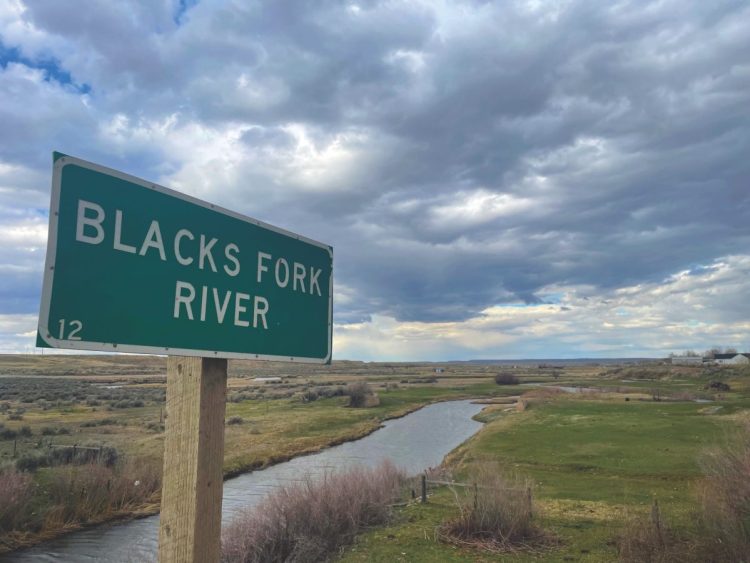
AFTER ALL THESE YEARS, I finally get to hotspot. Anyone who has ever suffered through the four-hundred-mile godforsaken
slog from Casper, Wyoming, to Echo, Utah, on I-80 knows it to be one of the most desolate drives in America. If you’re not
being run off the freeway by stimulant-powered semi-drivers, it’s only because snowfall or 60-mph crosswinds have forced
them to commandeer all the rest areas.
“AND FINALLY, I say to you,” Jesus announced, from the back of Simon Peter’s boat, to the crowd that had gathered on shore, “love one another as I have loved you. Thank you, Capernaum! Thank you, and good night!”
Jim Lichatowich is as happy as anyone that the Elwha dams on Washington’s Olympic Peninsula came down. But a recent attempt to witness the biological recovery
there reminds him that there are equally stubborn obstacles to steelhead and salmon recovery that unfortunately can’t be removed with dynamite or heavy equipment. “A
former colleague of mine organized a trip to Elwha after the dams were out,” Lichatowich says. “He called me and said, ‘the trip is still on but you’re not on it. The guy
from National Marine Fisheries Service that was gonna show us around mentioned your name to his supervisor and was told you couldn’t come.’ So I was uninvited. But that was the week that Republicans shut the government down, so no one got to go anyway.”
“The topic of stream access illustrates one of the most perplexing types of legal conflicts that can arise… Indeed, it is difficult to find a legal issue that is more tangled and uncertain.” —A Wildlife Primer (2009), by Eric Freyfogle and Dale Goble
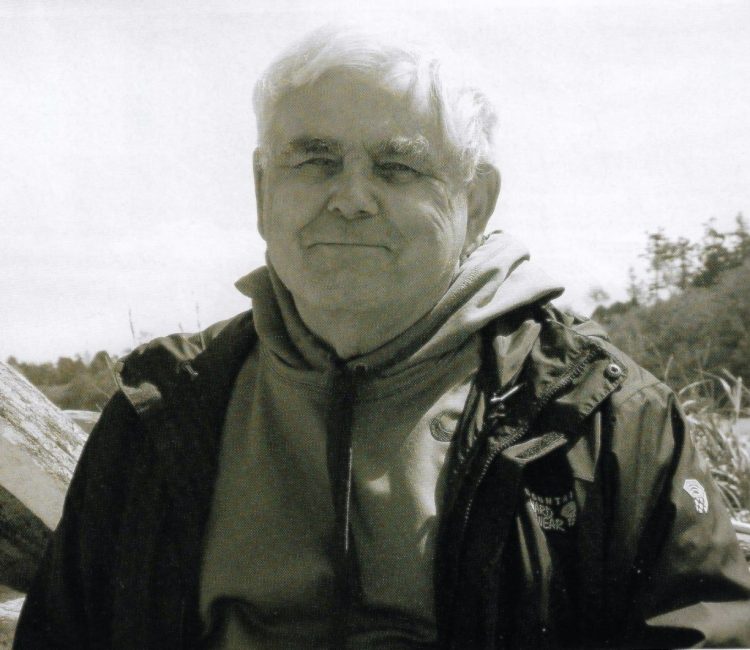
Colorado’s river laws might be in trouble. Roger Hill, the octogenarian trying to fulfill his dream of legally wade-fishing the Arkansas River, was at the Colorado Court of Appeals on January 27 and got good news about his case—Hill v Warsewa.
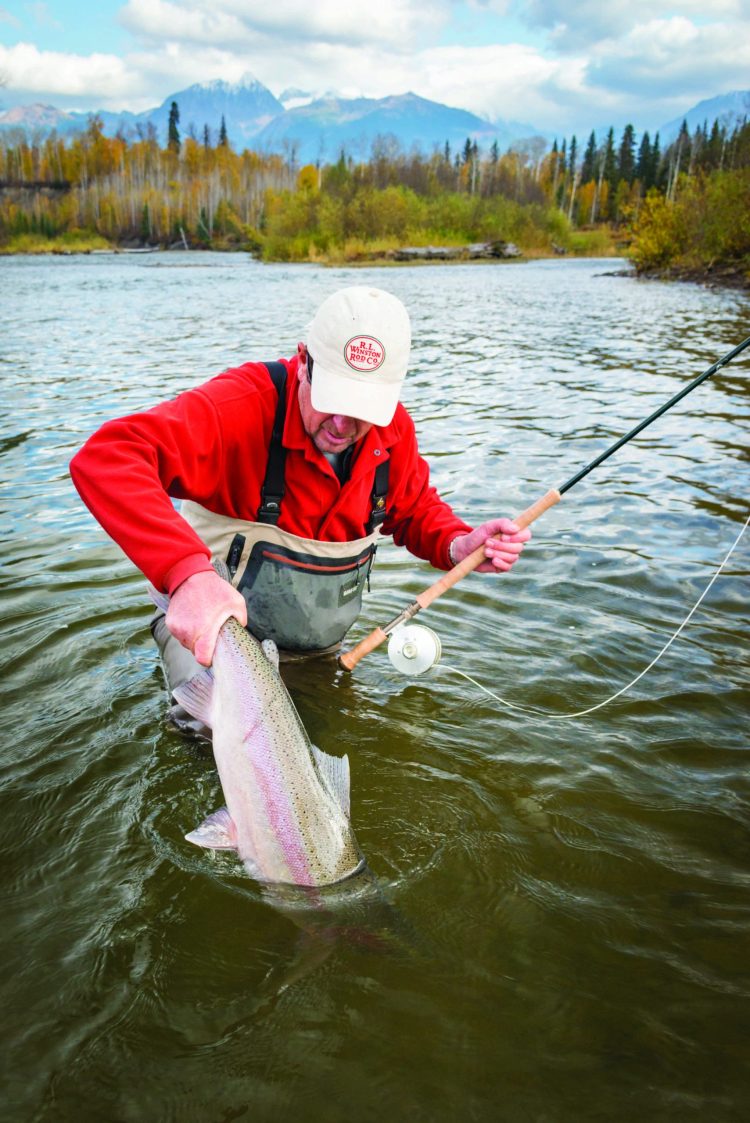
There was no doubt it was a steelhead. Until it wasn’t. The grab had been so jolting, the head shakes so violent, that no consideration was given to the fish being anything but a steelhead. Yet there at my feet, in six inches of water, lay a brown smallmouth of grotesque proportions. Pulsing and flexing, flaunting its outsized strength.
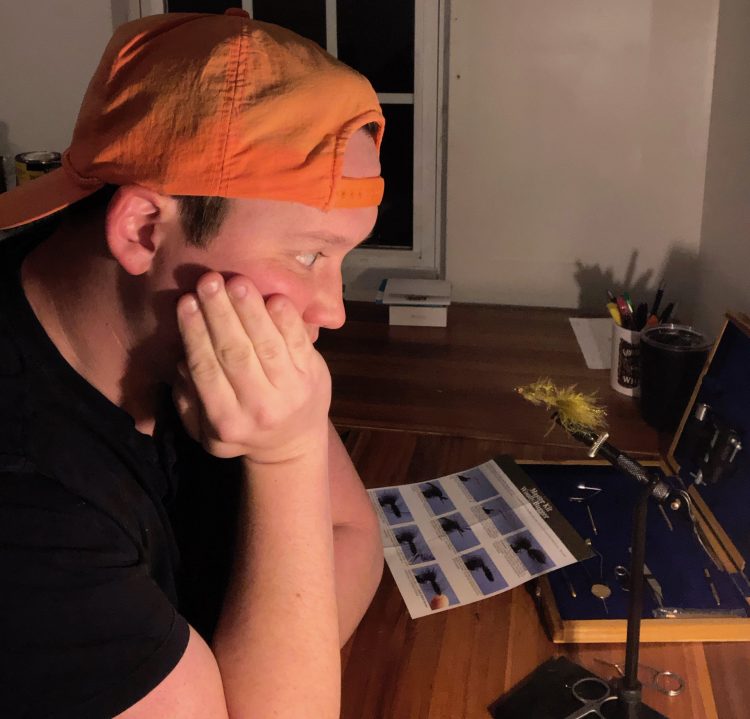
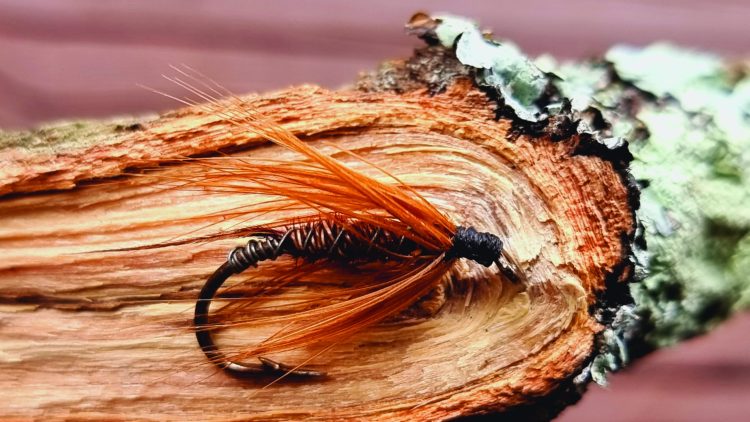
Now I understand how Mugato in Zoolander felt. Everyone at the fly shop is picking out different hackle, feathers, and fur, and here I am at the fly counter grabbing fistfuls of pre-tied adams and caddis, feeling left out for not tying my own.
In the middle of the journey of our life I found myself within a dark woods where the straight way was lost. —Dante Alighieri, The Inferno
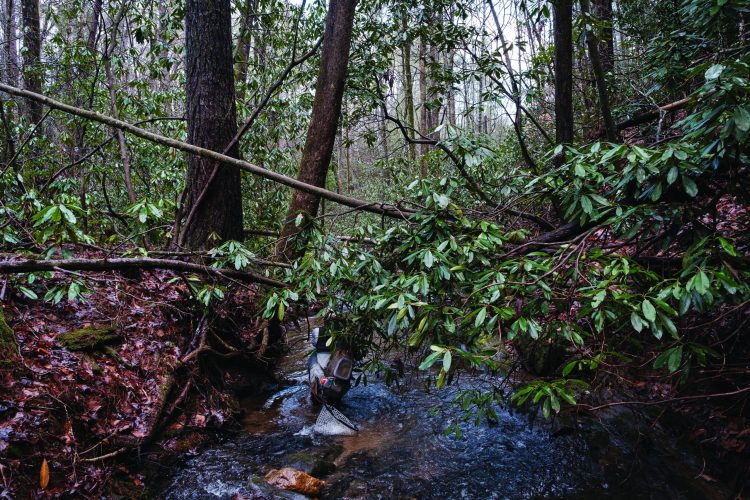
In Appalachia, there’s no straight way to travel. Laurel hell grows thick, and the only way to navigate it is to put your feet in a streambed and follow every meander and oxbow of the creek.
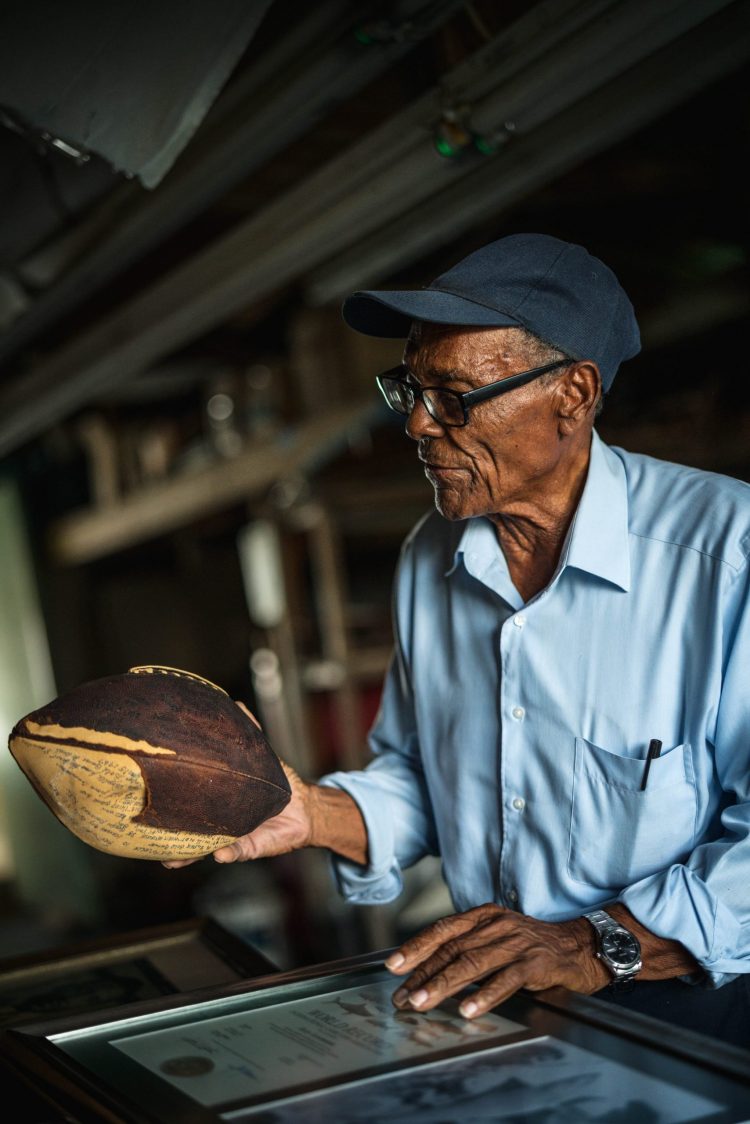
Bimini guide Ansil Saunders appreciating the Super Bowl I game ball
Mighty Waters, a wonderful movie released last year by Austin-based filmmaker Shannon Vandivier, tells the story of beloved Bimini-based guide and boat-builder Ansil Saunders, in particular how Saunders had taken Dr. Martin Luther King Jr. out for a peaceful day on Bahamian waters just four days before King was assassinated in Memphis on April 4, 1968. The fascinating story was part of the 2021 Fly Fishing Film Tour and was broadly shared with the public in early February by two of its sponsors, Simms and Costa.
The setting is the dining room of a fishing lodge in remote northern B.C. It’s early morning on a gray, drizzly day during a very slow week. Levine, one of the anglers, is talking to the head guide before the rest of the camp has come in for breakfast.
I find it best to begin all writing about flyfishing by first writing about hunting. Or, alternatively, the Asian culinary arts. I’ll start this one by talking about Boomer.
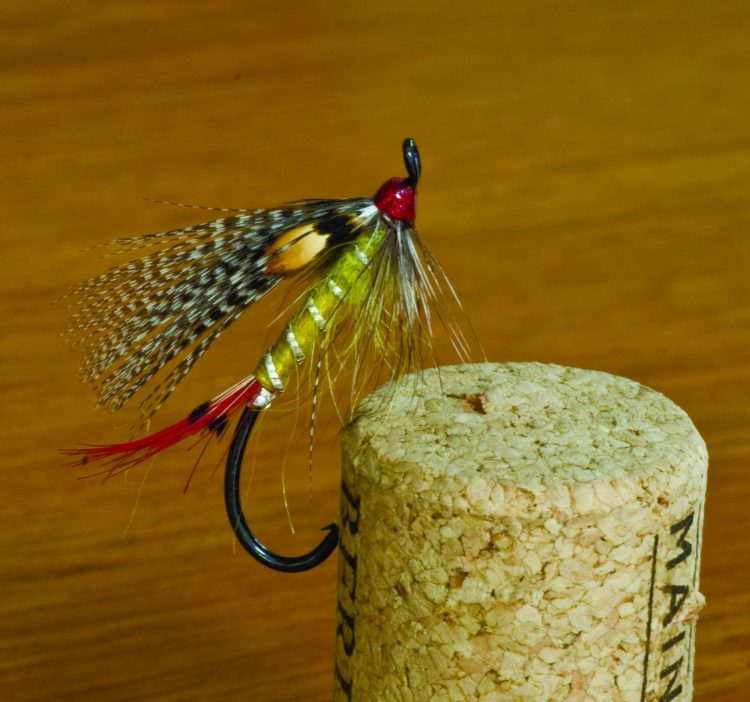
Sitting on my fly-tying desk, on a shelf above the straggle chenille and holographic tinsel, is an 80-year-old Richard Wheatley fly tin. The edges of its aluminum lid, with that distinctive satin finish, are rubbed bright from the friction of bouncing about in a fly-vest pocket. It bears the inscription:
There are two primary fishing cultures in Alabama: 1) The esoteric and exceedingly idealistic group of anglers that enjoy flyfishing and eating greasy Jack’s biscuits before a fishing trip. 2) Ricky-Bobby types who fish with junk baits. Needless to say, tournament pros burning up the interstates and roaring across impoundments with their 250-horse motors vastly outnumber those with “tippet” on their shopping list.
EmergenceSometimes, the fishing comes second By Britton White Emergence It was late morning on a sunny, calm, late-summer day. I’d been wade-fishing for a couple of hours along the Colorado River, a few miles downstream from my home in Carbondale. The only visible insects were a few tiny mayflies and midges hovering about twenty feet…
Memorial Weekend is typically a time to avoid fishing. But Clyde opens doors. And gates, with bass ponds behind them. I’m not a private-water-with-pellet-fed-trout guy, but access to an un-public largemouth lake in Tennessee? That’s another matter.
My older brother Charlie—the red-haired menace of my youth, and the protagonist of so many fishing adventures—came to visit me in Canada. It was mid-August when I picked him up from the airport. He was hungover and indignant, as one of his rods had been lost in transit. We headed straight for a well-regarded trout stream in southern Ontario where there were rumors of giant browns, stopping eight hours later at the local fly shop to book a half-day trip with some dude named Larry.
Let this be a warning to you and to me and to all the other salmon killers out there; to the moochers and trollers and dam builders; the seiners and gillnetters; sushi chefs and leach mines; treaty breakers, billy clubs, old-growth bulldozers, and an ocean of plastic; to fillet knives, fish farms, and this ever-warming world, let this be a warning: These fish will outlast you.
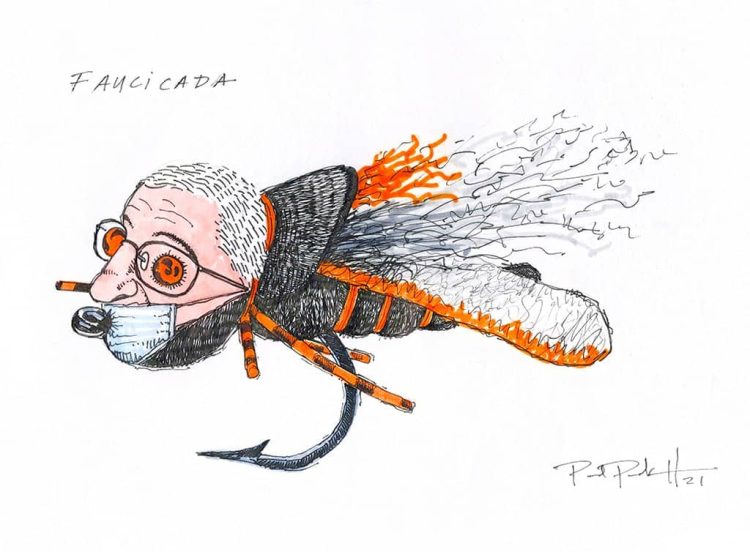
Lockdown at the ViseFifteen flies we’ve tied during the pandemic Illustration by Paul Puckett CHERNOBYL ANTIBODY. Unlike traditional flies, you eat this one. Helps ward off belief in fictitious cicada hatches. MARJORIE TAYLOR GREENE DRAKE. Only floats on the right side of the river—the far right, more like a side channel, or a drainage…
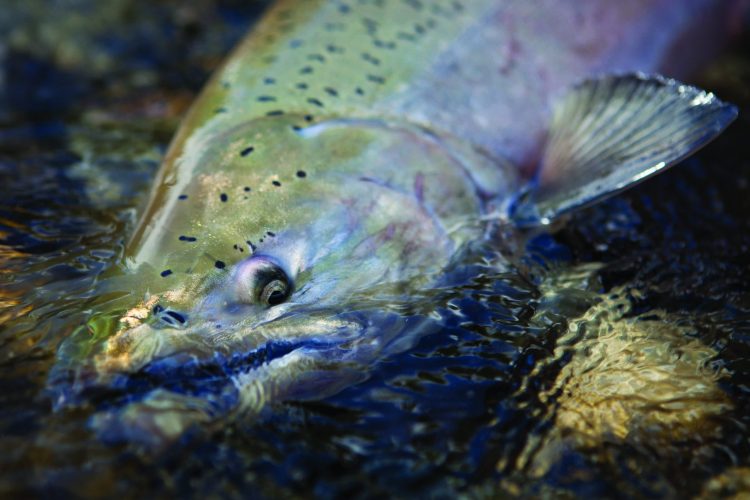
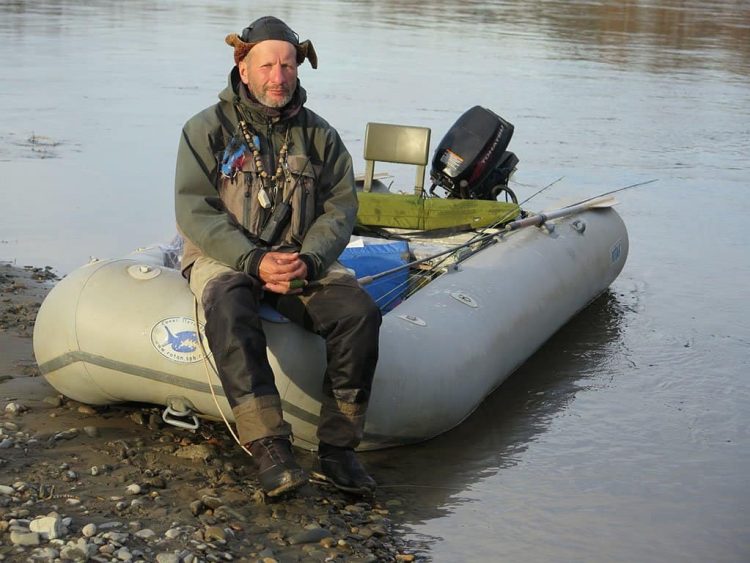
Misha Skopets’ Biggest FishFly Fishing Russia: The Far East, a review BY Ryan Peterson Photos: Guido Rahr (above), John Sherman (below) One day in the summer of 1979, Dr. Mikhail “Misha” Skopets, a young Russian ichthyologist based in Magadan in the Soviet Far East, found a mysterious fish skeleton in the stomach of a Boganid…
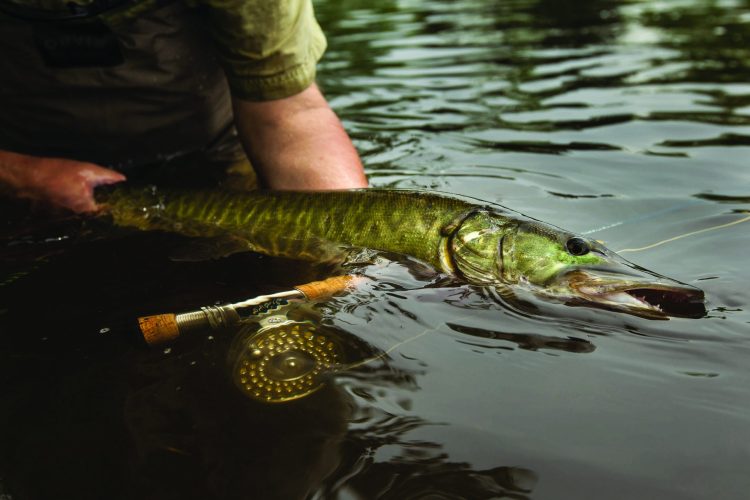
Let’s Go Bass’nIt’s time to test the warmwaters By Beau Davis and Tom Bie Photo by Jeremiah Watt Want to avoid bumping elbows with ten million new trout-chasers this summer? Then consider a guided day on some warmwater. You’ll surely face a less-pressured fishery, and if the trip includes kicking around in a float-tube, you…
Carp KoanA lesson in patience, persistence, and heartache By Michael Garrigan Photo by Jeremie Hollman Devoted to the untraceable path, carp are muddy enigmas that speak an ambiguous language. Wanderers of sunken trees along river islands, their routes are tied into knots, impossible to untangle. One can only hope, with carp. One can only seek.…
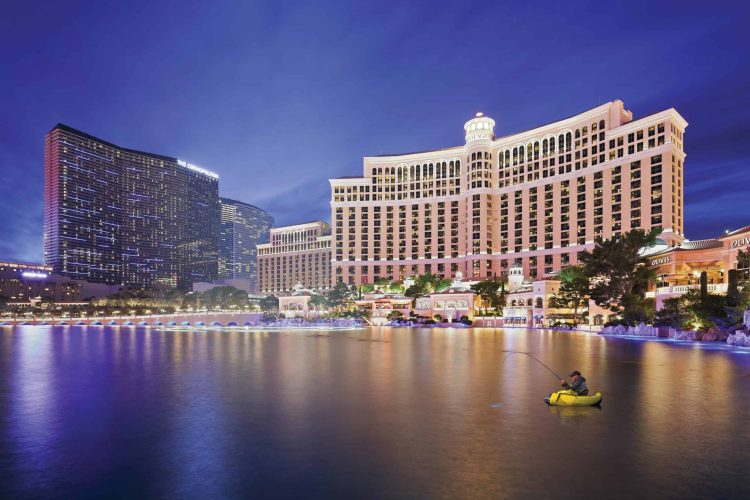
I thought I was still buzzed from the night before when I first saw what appeared to be a person lounging in a yellow pool-floatie on the water. “Only in Vegas,” I thought. Some drunk idiot ends up using Lake Bellagio as his personal swimming pool. But looking closer, I could see that the person was a man moving his arm back and forth a few times before bringing it to rest. “Is he casting?”
None of us guessed what was coming. Within hours of our leaving the river, the county would close all boat ramps and Oregon’s governor would implement stay-at-home guidelines. We were fishing on the last days of winter steelhead season 2020 and we didn’t even know it.
Until January 4, I’d never even heard the term “float-n-fly.” It sounded like a kid’s ride at the fairground, or the street name for some illicit new drug. But I Googled it that day—the same day Oroville, California-based flyfishing guide Ryan Williams, and his partner, Logan McDaniel, won the Shasta Lake Wild West Bass Trail tournament.
Photo Courtesy Rep. Simpson's Office. Idaho's 2nd District G.O.P. Rep. Mike Simpson, at the ribbon-cutting ceremony for the Stanley-to-Redfish Lake Trail.
In April 2019, Congressman Mike Simpson, R-Idaho, gave a somewhat stunning keynote address at an environmental conference hosted by Boise State’s Andrus Center for Public Policy. His comments were thoughtful, educated, and encouraging. But mostly, they were surprising, particularly his thoughts about what might be necessary to save Idaho salmon. Rep. Simpson and I discussed the topic in mid-December, and his quotes below come from his keynote and our conversation. Can Idaho salmon truly be saved? No one knows. But the Congressman has been down a similarly daunting path. In 2015, Mr. Simpson’s 15-year effort to broker a seemingly impossible deal resulted in the creation of Idaho’s Boulder-White Clouds Wilderness. (Which Mark Menlove covered in his 2014 feature, “A Fisherman’s Monument.”) If wild salmon and steelhead can indeed be saved, then Rep. Simpson is providing these essential fish the best shot they’ve had in decades.
Photo by Kurt Budliger. The deeper colors of a seasoned grayling.
I think that Ingrid would want you to know—as she stands in her waders, stands by her weir, looking down at a dark mass of grayling that were trapped in the night—that there was a time when no one would’ve thought fish would ever need to be counted. But she’d also want you to know that these don’t have to be the last wild days. She would want you to know that not everything has been lost, and that there is still the hope of unknown waters.
My first tarpon on a fly was a stout, laid-up fish that ate my worm and broke me off an hour later. I was a teenager at the time, and fortunate to have a father who took me on an annual spring trip to the Keys. But as I grew older and started achieving some success on the bow, my focus shifted to permit. Like many permit anglers, my trips often ended with a long flight home, followed by a long-winded explanation to my wife about how I could spend three days fishing, catch nothing, yet still feel the trip was “a step in the right direction.” At the height of my addiction, I was focusing more on the seconds ticking away on my watch than I was on scanning the water. I’d lost the mental game before even stepping on the skiff.
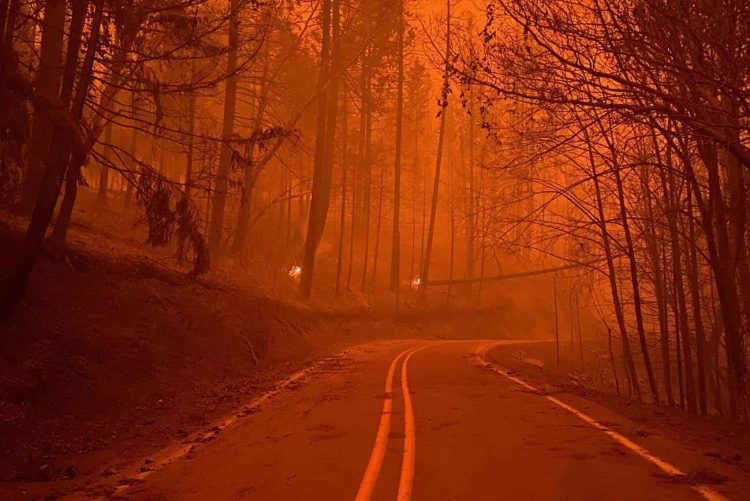
Archie Creek Fire along the Umpqua Hwy (OR 138) Photo taken Sept. 12, 2020. INCIWEB/NWCG (National Wildfire Coordinating Group)