
French Connection
By George Rogers
Last June, my wife, Denise, asked me to stop speaking to her—in English. I have friends who dream of this. Not me. I like my wife.
French, she said, would be fine. She’d be attending an immersion program and taking a French-only language pledge. If she broke the pledge, she’d be asked to leave. Militant? Yes. But also very French.
My wife has an obsession. She loves French the way I love fish. Of course, this was before we found ourselves in Guadeloupe with her hooked to a big jack headed for blue water. This was also before our guide—a kid, really—or, more specifically, a punk who, when he wasn’t poling us aimlessly through the mangroves, or giving me grief about my casting, was tapping away on his cell phone. Or gunning our skiff for cover, trying to avoid bursts of rain before they even hit—as if anyone needs to take shelter from Caribbean rain on a 90-degree day. Honestly, I thought our guide was a little—as Denise would say—paresseux. Lazy. Besides, he almost cost her that fish.
Earlier that year our sons had orphaned us—one off to college, the other to work—leaving us unattended. Suddenly, Denise and I found ourselves staring at each other from opposite sides of what felt like a much larger house. A remarkably quiet house. We were empty nesters now, no longer tangled in sports schedules, music lessons, or college tours. For the first time in more than twenty years, other than two knucklehead dogs, there was nothing holding us back. Suddenly we were free. Free to pursue our own obsessions.
That summer, Denise’s French improved. Mine did not. Growing up ten miles from Quebec, with my limited French, I could order a beer, count slowly to twenty, and troll opposing goalies. What else is there to say? But I soon realized I could no longer have meaningful conversations with my wife, which made for a long summer. Ça va? I’d ask, using up most of my French. Ça va bien! she’d reply, before picking up both ends of the conversation and delivering what sounded to me like beautiful French soliloquies, never once mentioning hockey or bière.
One day, frustrated with one-sided conversations, she leaned over and whispered to me in English: “Plan a trip. Someplace French. With fish. Tu comprends?”
“Oui, je comprends!”
Guadeloupe is in the Lesser Antilles, an overseas department of France, a pair of Siamese islands conjoined by twin bridges. One island, Basse-Terre, is volcanic, mountainous, and ringed with winding roads and near-empty beaches. The other, Grand-Terre, is flatter, more populous, but home to turtlegrass flats. It’s not the Bahamas, but there’s enough wadable water to provide regular shots at permit, big bones, tarpon, and jacks.
More importantly to Denise, everyone spoke French. The day she hooked the jack there was rain on the horizon, falling hard from distant clouds. Frigate birds rose on thermals, black wings locked and soaring. It had been a tough morning, with no fish.
First up after lunch, with rod in hand, and chatting in flawless French with our punk guide, Denise delivered a spawning shrimp to a good bonefish, a mirror-scaled torpedo with an economy of motion that matched the birds above, a fish that ignored her fly and our boat and continued to glide steadily on, as if in judgement.
Our guide told her to pick up and re-cast. The fish was moving left, but Denise cast straight ahead. Focused only on the bonefish, he told her to cast again—first in French, then, when she ignored him, in English, which I could tell annoyed her. She said, Non, juste là! (“No, right here!”)
I certainly wasn’t going to get involved. I’ve been married to Denise long enough to know that she doesn’t always do what she’s told. In fact, insisting she follow instructions almost always means she won’t. Our guide was still watching the disappearing fish, pointing as it swam off to emphasize what she’d lost.
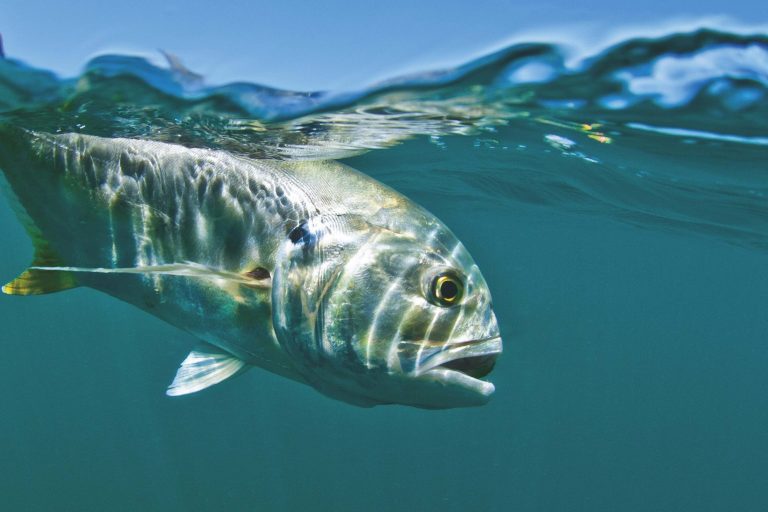
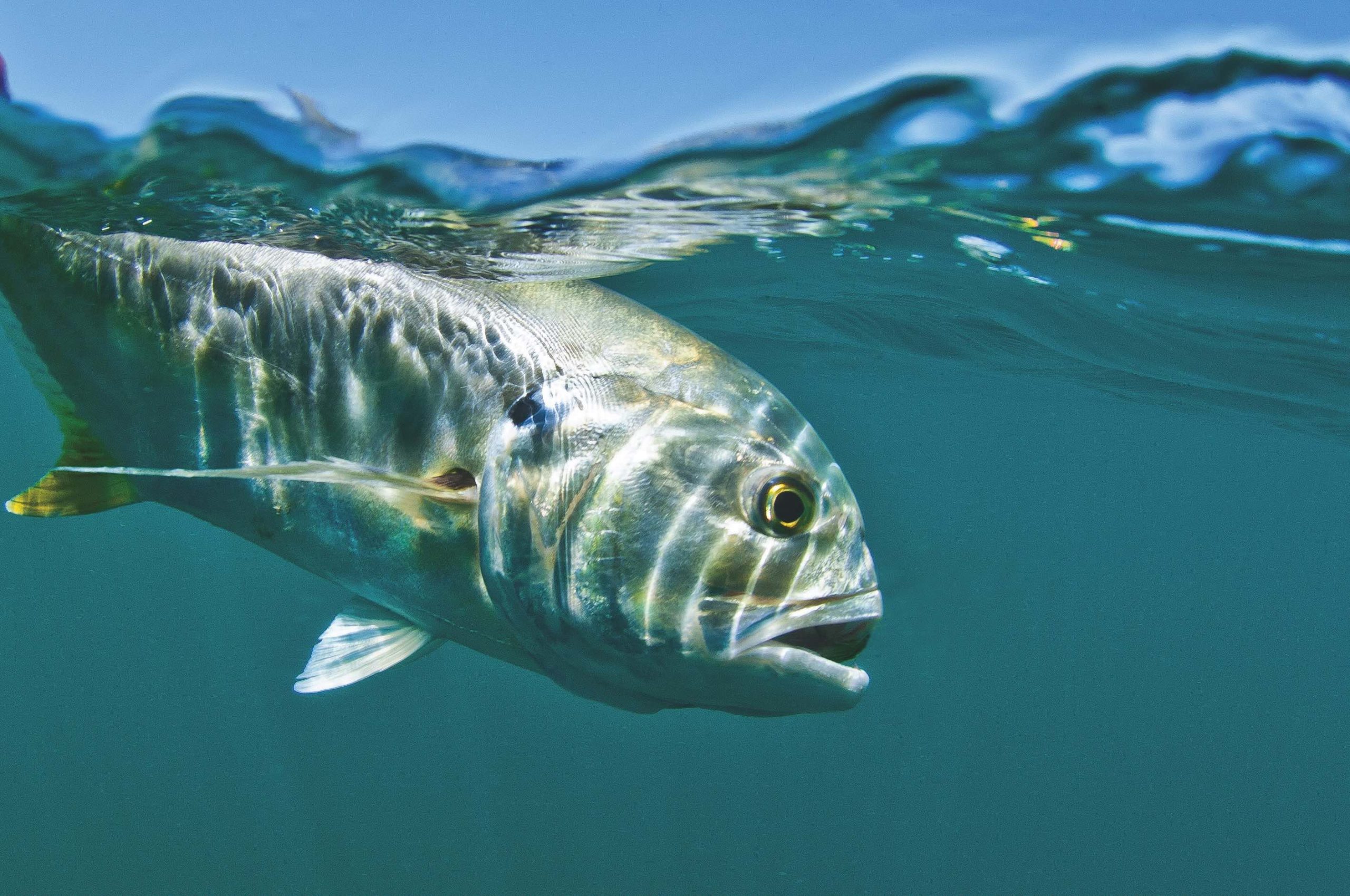
But Denise had spotted pair of jacks. Jack crevalle move like hyenas, with the same wild eyes. Manic and constantly hunting, these are fish that love a good smash-and-grab, which is exactly what the bigger fish did to her shrimp.
The jack ran hard and straight, almost reaching a moored sailboat before turning. The clouds were nearly on us now, frigate birds rising to meet them and the wind picking up. Denise had managed to regain line and some control over the fish when it ran again, her reel alive and spinning. Meanwhile, the guide and I offered what was likely the same confusing advice in two languages. She didn’t need it.
The greatest thing about moments like these is how unexpected they are; how a lean day can turn. In an instant, everything is forgotten—the empty casts, the distracted guide, the coming rain—leaving room to consider what’s underneath it all: that we’re older now but not too old; that our boys have left but aren’t gone; and that we have, maybe, twenty or more good years ahead of us.
But for now, Denise’s line is still taut, the fish circling closer. Two more short runs, and the jack is next to the boat, on its side, yellow fins on blue water. And then our guide, in one smooth motion, tails the fish and hands it to a beaming Denise, congratulating her in French, our obsessions colliding.
“It’s beautiful,” she says. “Merci.”