


Crude Water on Curaçao
Words & Photos by Paul Kameen
When I picture flyfishing for tarpon, the first thing that comes to mind is the setting. I see turquoise flats stretching to the horizon and then melting into deep blue, all of it rimmed with thick green mangroves. That’s not where I ended up.
Instead, I found myself in a ten-foot inflatable raft, held together with duct tape and Flex Seal, floating through an oil slick. The scene looked more like a fundraising ad for an environmental campaign than an idyllic watercolor painting. Bubbles frequently rose from the bottom like someone had dropped an Alka-Seltzer. And there was the oil—not a faint, shimmering rainbow sheen but raw, black crude. I stared at the water wondering how any fish could survive it. Hydrogen sulfide gas and other volatile compounds burned my nose and eyes. As I stripped my fly through clouds of lubricant, the line turned slick in my hand. Even if I hooked a tarpon, how the hell was I going to strip-set?
As the sun began to drop, the refinery stood taller than ever. Looming, heartless towers sprawled in every direction, their outlines losing all detail, transforming into lines of endless black monoliths. An intense equatorial sun flooded our surroundings with reds and golds. The oil plumes eventually disappeared, along with everything else, into the darkness.
Our guide, Michel, never seemed to lose his confidence as he bounced us around the bay from the lights of the harbor ships to the concrete ledges of the loading docks. We tried everything, from giant Pop Fleyes that imitate huge mullet the tarpon were keying on, to traditional tarpon bunnies and shrimp patterns. Just when it seemed we’d be heading back empty-handed, Michel cracked a smile and said, “There is one more place.” He motored us to a pitch-black corner of the mangroves, where a light from the refinery illuminated a single patch of water the size of a volleyball.
When my line came tight, I was not remotely ready—my fly had just landed, and I was thirty feet from where Michel said the fish should be. Nevertheless, I shoved the tip of my rod down and slammed three strip-sets as best as I could on my slimed line. The fish went airborne instantly, then followed that up with an impressive series of acrobatics.
At least, that’s what I imagined happened, anyway, since it was pitch black in front of us. I had no idea if the fish was eight pounds or eighty, but, like most anglers, my mind leaned toward the latter.
Once I was able to get it on the reel, each rotation significantly reduced my size estimates. When it got to the boat it was far from the giant I was hoping for. But that didn’t matter. I looked up at the freightliner looming over us like a skyscraper, then took in the refinery’s dystopian light, then looked at Michel and declared, “This is the craziest place I’ve ever caught a fish.” Michel said that the giant was next. I recited to him a famous Dutch proverb: “Bij nacht zijn alle katten grauw.” (“At night, all cats are grey.”) He laughed, and replied, “No, in the night, all cats are silver.”
Schottegat Harbor is one of the largest natural harbors in the world. It’s located on the island of Curaçao, just off the north coast of Venezuela. Curaçao, like its neighbor Aruba, is an autonomous country within the Kingdom of the Netherlands. (Hence Michel’s knowledge of Dutch, the island’s official language.) This is not the case for nearby Los Roques. Formerly a popular bonefishing destination for Americans, Los Roques is under the jurisdiction of Venezuela, and, as you may have heard, the US and Venezuela are not so friendly lately.
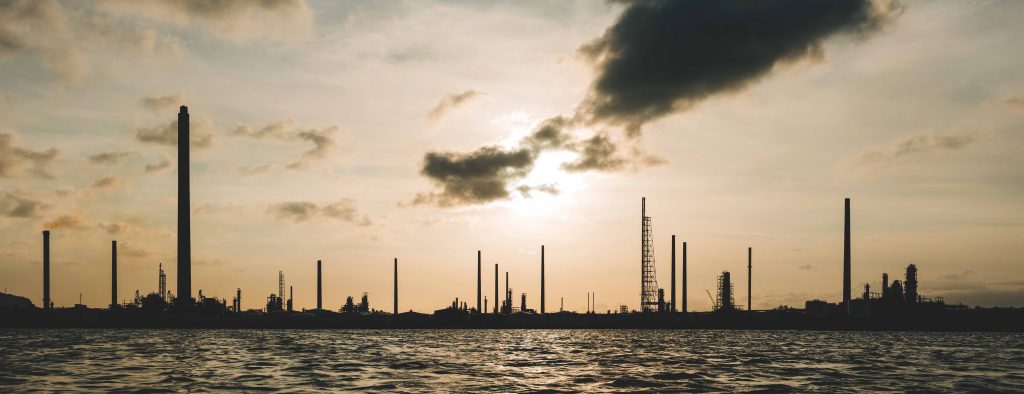
The soothing scenery of Schottegat harbor
Inside Schottegat Harbor sits the Emmastad ISLA refinery, developed by Shell in 1916 to process heavy, sour, Venezuelan crude. Sweet crude is easier to refine and fetches a higher price, especially as environmental regulations have tightened. Over the past thirty years, refineries like Emmastad faced a choice: invest heavily to keep up or accept deep discounts on what they could process. Then came supply-chain issues, sanctions, and a changing market. By 2019, the Emmastad refinery shut down.
While it’s easy to call that an environmental win, the truth is murkier. Many believe the site has become even more hazardous since it closed. Just because refining stopped doesn’t mean pollution did. Tanks and corroding pipelines surround the water, and some are still submerged inside the bay. With no oversight, leaks go unchecked. A functioning refinery at least separates clean water from contaminated runoff.
Without maintenance, rain becomes a delivery system for oil and petrochemicals. Schottegat was already one of the most polluted coastal zones in the Caribbean. Now, every storm raises the stakes. Long-term forecasts predict an increase in rainfall for Curaçao over the next decade. So far, that prediction has held. The rain comes earlier now and sticks around longer.
Unable to stop thinking about the oil around us, I asked Michel if he thought the fishing would improve if the harbor were cleaned up. He gave a sharp grin and laughed, then told me a story. “We used to produce salt here,” he said. “It was painful and harmful work, and eventually we stopped. But they left the flats how they were.”
At first, I thought he had misunderstood my question, but then Michel kept going. “They were disgusting, the flats. Algae blooms all the time. Flamingos would come in to feed on shrimp. With all the bird crap in shallow water, there were tons of nutrients. People hated it—smelled awful, looked worse. But I loved it. I could take clients there and catch giant snook. People never believed me. The water was so shallow, so gross, but you could see the snook backs breaking the surface. I think they spawned there.”
He paused before continuing.
“Eventually they decided to clean it up,” Michel said. “They dug it out and made it deeper. Now it’s beautiful. But nothing goes there. No birds. No fish. Nothing.”
He stared into the distance. “It’s funny,” he said. “We try to make things better, but we’re not God. So many times here, we try to help nature, and we only make it worse.”
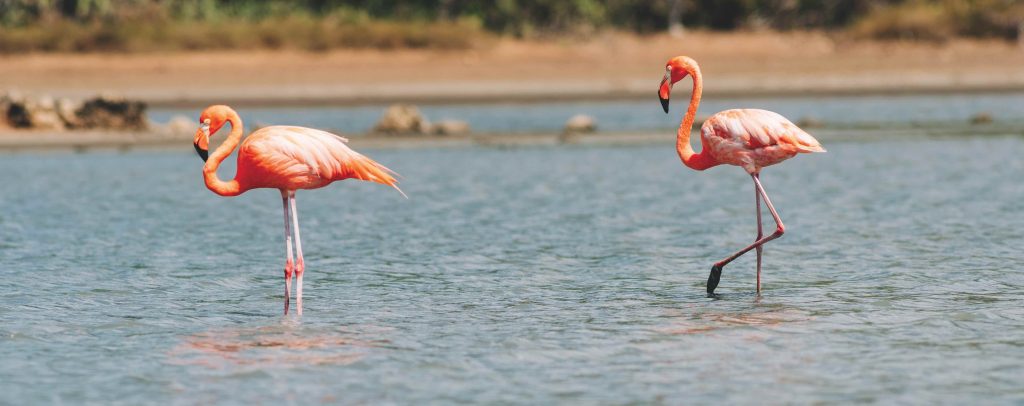
Where are all them shrimp at?
From the look on his face, I could tell Michel wasn’t excited about the idea of anyone “cleaning up” the harbor.
Before I arrived, Michel and I spoke on the phone and he told me he had clients from all over the world. He said nearly all of them had told him that they’d never seen a place with so many tarpon. Not that catching one is guaranteed. Michel has traveled to fish for tarpon in other places, and few match Curaçao in raw abundance. Still, the fish here are stubborn. Or, as Michel puts it, “spooky.”
Nevertheless, he’s been catching tarpon in this bay for more than twenty years. In the past, most of the fish were juveniles. Big ones were rare. That has changed. This season, Michel has caught more tarpon over ninety pounds than he would have even seen in a full season five years ago. So what’s bringing them in? Could the refinery, abandoned just six years ago, have something to do with it?
After seeing the bay firsthand, I have some thoughts about what might be happening. Snook, tarpon, and mullet can all breathe air when they need to. They do not have to surface, but they can if oxygen levels drop. This gives them an advantage most other fish don’t have in hypoxic water.
Crude oil strips oxygen from the system in several ways. It forms a slick on the surface, reflecting sunlight and blocking photosynthesis in plankton below. It also stops oxygen from entering the water. On top of that, microdroplets of oil fuel blooms of bacteria that feed on hydrocarbons. These microbes burn even more oxygen. Most fish struggle or die under these conditions. But tarpon, snook, and mullet survive, or perhaps even thrive.
Both guides I spoke to said the fishery has changed. Tarpon come earlier now and in greater numbers. One possible reason is that oil and chronic pollution rarely travel alone; they’re often accompanied by runoff. Sewage, fertilizer, and organic waste carry nitrogen and phosphorus into the system, which fuels algae blooms and consumes oxygen, similar to agricultural runoff. Oxygen levels crash. Most fish cannot handle it. For the few that can, it often means open space, fewer competitors, and fewer predators.
No one I asked said they’d ever seen a shark in the bay. Michel told me he hasn’t seen one in more than twenty years. This makes sense, as most sharks must swim through clean, oxygen-rich water to breathe. Once a tarpon reaches young adulthood, it has few predators besides large sharks. Their absence is another factor working in the tarpon’s favor.
Another factor benefiting tarpon is something ecologists call a pollution refuge. Fishing here is still vital—for food, culture, and income—but these inshore waters are mostly ignored. No one wants to eat fish from a bay filled with oil. Yet the runoff makes the bay productive. It brings more algae, more zooplankton, and more bait. The low oxygen acts as a filter. In a healthy system, nutrients would spread across hundreds of species. In Schottegat, only a few can take the hit. Those few thrive.
But how long can this unusual balance last? Pollution refuges are fragile. They depend on an uncommon mix of neglect and accidental nourishment—conditions that are rarely permanent. Cleanup efforts, climate shifts, or even small ecological changes could tip the scales quickly. Schottegat Harbor, for now, remains a place where tarpon thrive amid oil slicks and the shadows of industry. But it is a balance that nature never intended, and one that humanity is unlikely to sustain.


Paul Kameen
