

Summer Doldrums
By Colten Braybrooks
A sharp sun is pinned overhead, drilling into the back of my neck like a hot desk lamp. I’m alone in a rowboat on a lake, a shallow depression with the sort of soft marl bottom that squelches unpleasantly between the toes. Its shape is the result of glacial waves that once buried northern Michigan in six thousand feet of hard, gray ice. In late June, with a ring of leafy oaks surrounding the lake and the air hanging wet and heavy, the fact that there was even snow here three months ago seems unlikely, and a mile of ice, impossible. When it’s hot here it seems like it’s always been hot, and always will be.
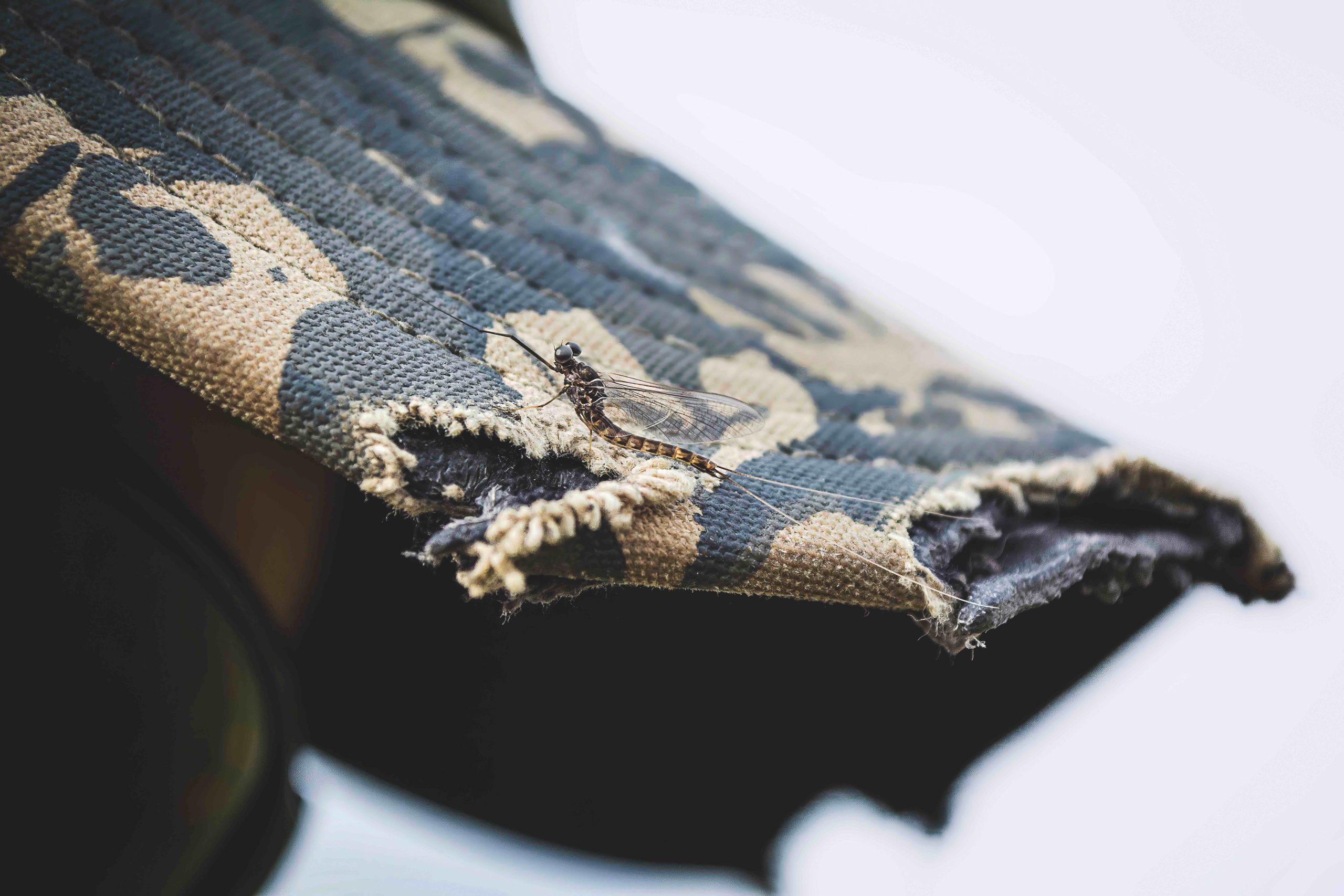
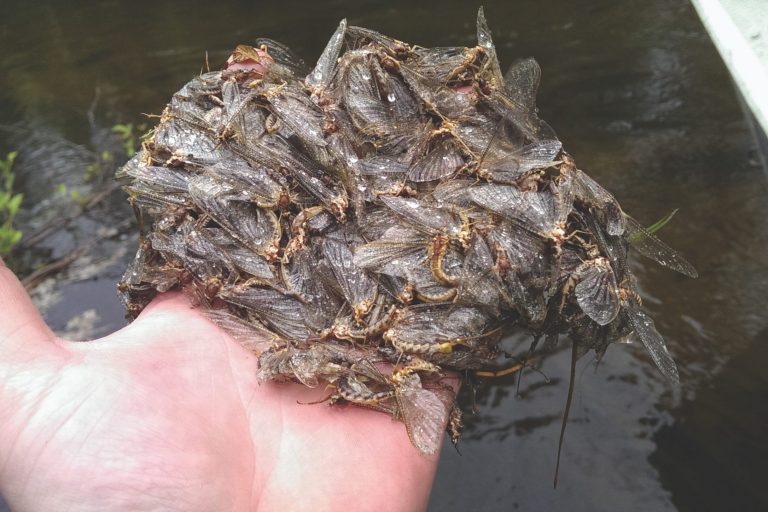
From the air I’m a dot in the middle of a mirrored lake among many similar lakes, laid out like holes in swiss cheese across a swath of hardwood flats and cedar bottoms running from here to the ragged edge of Lake Michigan. The sameness is broken here and there by river valleys and grassy meadows, bits of distinction largely invisible from above. Even at ground level it can be tough to appreciate one reedy shoreline from the next. You must be the sort of person who notices which kind of tweety bird just flew between those two cedars leaning over the river, or whether the mid-size mayfly clinging to a cabin window is a gray or brown drake.
I am not that sort of person, though I sometimes try to be. The entomologist in me is as disinterested in his job as a toll-booth operator. I still don’t even know why they’re called drakes. Until recently, I just thought of them all as mayflies. Like how a worm is a worm. There are different lengths and colors, but from my perspective—and I’m betting a fish’s—they’re all worms. In his book, Good Flies, John Gierach considers the origin of the term, drake, offering up a few possibilities before concluding, as he often did, that it probably doesn’t matter all that much.
When I was 10 or so, I plucked what I later learned was an Adams from a tin fly- box in my grandpa’s garage. Through a loosely scientific process and the abundant free time of a young boy, I discovered that, when mayflies were coating the front windows of our cabin, fish in the lake would trip over themselves to eat that little dry fly. Quite proud of this revelation, I stood on the dock and cast my dad’s old eight-foot graphite rod until the bluegill and bass shredded that Adams. I was then driven to the fly shop in town to replace it. Someone led me to the fly bins in the back. And then one thing led to another.
Now I’m sitting in a boat, daring the sun to soften a bit so I can put down the spinning outfit and pick up my fly rod. When the sun finally begins to drop, the world seems to come out from the shade. A breeze ripples the tops of trees, sending a flurry of cottonwood seeds into the air. A fish rises far across the lake, and I watch as thousands of fluffy white clumps descend to the water. On cue, the glassy surface erupts with the swirls of feeding fish, mixed with the dapples of mayflies hatching and then dying.
I grab my rod, tie on a sparsely dressed Adams, and pull a few lengths of line off the reel. There’s no need to find a target. Instead, I just stand on the seat and enjoy the casting, feeling the soft flex of the rod through the cork, the line stretching cleanly away at each tick of the clock. Ten, two, ten, two—just like Reverend Maclean’s metronome. The feeling brings a sort of first-sip-of-whiskey buzz, running from the brain stem all the way out to the fingertips. I let the cast go, holding the rod- tip high so the line falls softly to the water, feigning the need for stealth. The fly drops lightly and disappears into a swirl the second it lands.
I can’t really say that life has come full circle, because my mental tether has never allowed me to get that far from home. No matter where I am, I’m sort of always here, floating on the soft summer water of a northern Michigan lake, casting something that looks sort of like a mayfly, and catching fish
that are too happy to care.



Colten Braybrooks
Colten Braybrooks is a graduate of Grand Valley State in Allendale, Michigan. He works as a finance manager, but he doesn’t write like one.
