

Introduction to Self
Monday morning. Standing ankle deep on a Bahamian sand flat with a friend and a guide. It doesn’t take long to realize this line of work has its perks. After all, I haven’t met too many people that have skipped class to hunt for their first bonefish.
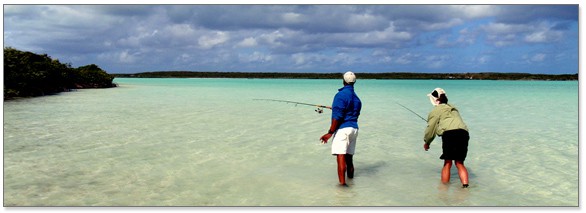
Skipping out on work to write for The Drake isn’t as sexy as landing that first bone, but it’s a new challenge in its own right. I am a fisheries biologist and spend my days crunching mathematical models, writing scientific articles, and spending time in the field. Writing for the public is new to me, but like moving from bonefish to permit, it is a step I must take. It is vital for stakeholders to understand the process of fisheries management, and The Drake has given me a platform to this end.
To start, I should answer the first question I get asked: What exactly do I do? This isn’t an easy question to answer, which often frustrates my parents at the dinner table. Dr. Jon Schnute, a mathematician and fisheries ecologist, said it best when describing his job to a neighbor on a plane flight. He said he was a detective who assembles small clues about fish populations into a coherent picture. The problem Jon identified was that we never get to observe an entire population; we only observe the fish we catch. So when studying a fish population, you only get small pieces of information here and there, and these pieces of information are only part of a much larger story.
Being trained as such a detective is an interesting process. There is no single skill-set to learn since every ecological system and fishery is different, requiring unique research techniques and resulting in different clues. As such, my background did not begin in fisheries, but instead as a Biology major at Duke University, working on marine invertebrate physiology. Becoming restless working in a lab, I branched out and studied the long-line fishery of Hawaii, the interface of urban development and tropical landscapes in Singapore, and the conservation of nesting leatherback turtles in Trinidad. After graduation, I worked on mother-pup sea otter interactions in Monterey, California, and tracked manta rays and whale sharks in Mozambique. Although these experiences do not appear to directly relate to the study of fisheries, they have taught me unique ways to approach ecological and human-dimension issues, so that I can creatively paint coherent pictures from the clues I collect.
Since leaving Africa, I have spent the past four years working towards a PhD in Fisheries and Aquatic Sciences at the University of Florida. I am learning several quantitative techniques, while forming a deeper understanding of marine ecology. Specifically, my main research interest is the role of coastal habitats in supporting the juvenile phase of exploited marine fish. I collect clues toward this goal by catching and marking hundreds of juvenile snook each year in Charlotte Harbor, Florida, and tracking them with a series of underwater tollbooths [for more information on Andrews work, see Jason Houston’s “Twelve Apostles” article in the Spring 2011 issue of The Drake]. In addition to this, I have completed multiple projects on the lionfish invasion of Caribbean reef systems, documenting aspects of the invasion’s ecology and mathematically evaluating potential management strategies.
As a fisheries detective, I’m always looking for new problems to investigate, and look forward to hearing and addressing your questions through this new online column: “The Life Aquatic”. Although I have a variety of ideas for future articles, I encourage you to contact me with any issues or ideas you would be interested in hearing about.

