
Colorado's Newest Public Water
Photos and Words by Noah Bagley
There’s a certain solitude and wonder that only public lands can provide. It’s freedom in its most tangible form. These places have given me some of my strongest memories, but it is no longer safe to assume they’ll remain public forever.
Whether for resource extraction or the development of large-scale housing projects, public lands sit squarely and perilously on the chopping block. It’s for this reason that I was equal parts shocked and ecstatic when I read this headline in March: National conservation area growing by 4,000-plus acres in Western Colorado.
The story described a parcel that sat adjacent to the Dominguez-Escalante National Conservation Area, a swath of red rock canyons that had fast become one of my favorite destinations in the Centennial State.
Having experienced surprisingly strong fishing in the region before, I didn’t need much convincing. A chance cancellation of the next day’s finance class opened my schedule, so I planned an outing. Fleeing campus, I drove west, safe in the knowledge that, for the next twenty-four hours, I could legally investigate a newly accessible stream.
On Highway 50, past the town of Delta, muted tones of dry rolling hills give nothing away. The only interruption to the arid expanse is the distant rise of the snow-capped San Juan Mountains. It feels empty, providing no indication of the oasis beyond.
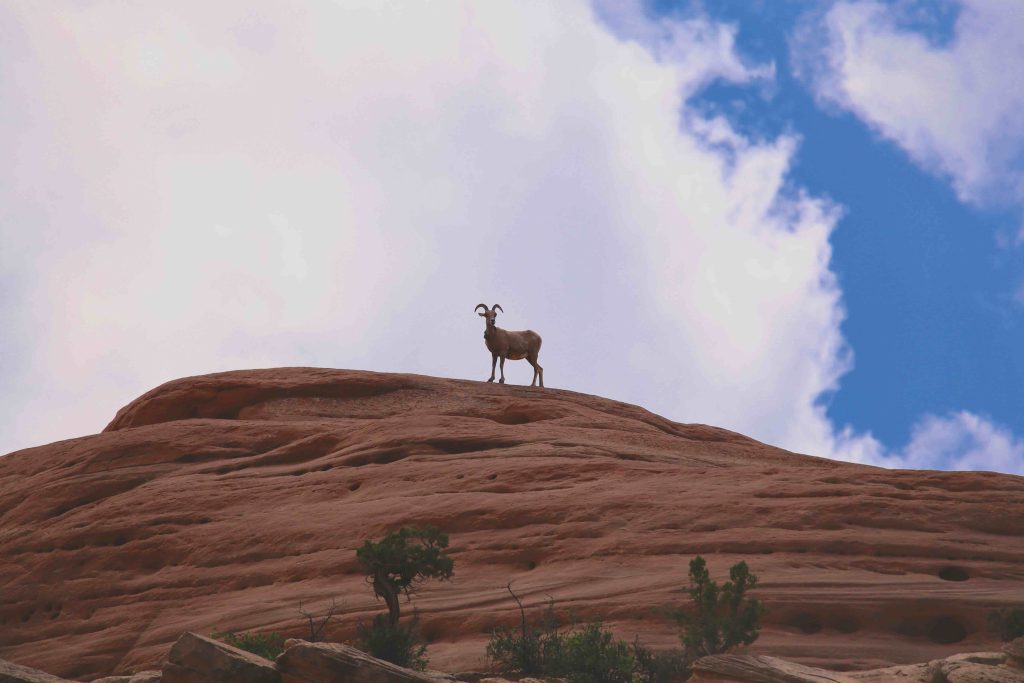
A desert bighorn takes in the view
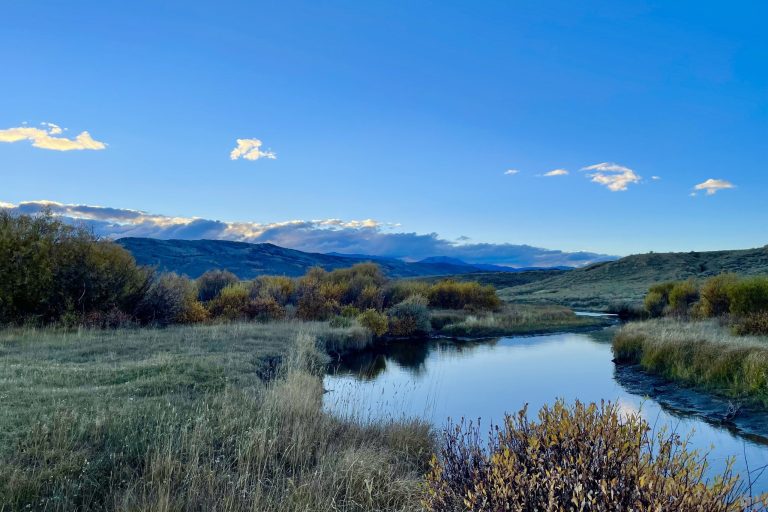
But turn off onto a dirt path, keep heading west, and you’ll find it. The muddy brown Gunnison River cuts through the landscape, and here, adjacent to the current, is where Colorado’s latest public-land acquisition begins.
Established along the Gunnison River and Escalante Creek on old homestead tracts, the Escalante Ranch complex was a historic cattle operation. The property spanned 4,000 acres of land, interspersed with decades-old BLM-managed parcels. Within the ranch sat valuable archeological sites, renowned climbing routes, the largest herd of Desert Bighorn in Colorado, and some appetizing trout water. The potential for one of Colorado’s premier desert wildernesses was within reach, only interrupted by the foreboding signage warning: NO TRESPASSING: VIOLATORS WILL BE CAUGHT AND PROSECUTED.
When the Escalante Ranch Property hit the market in 2023, interested parties acted fast. The Conservation Fund, along with the Colorado Canyons Association and BLM, pledged $6.9 million upfront, money allocated from the federal Land and Water Conservation Fund.
The lofty sum ranked among the largest-ever acquisitions by the BLM in Colorado, yet an additional $5 million was still needed to complete the deal. In the subsequent three years, grants and donations provided through The Conservation Fund generated the required amount. After a tense process ripe with the risk of commercial development, beginning in March 2026, the parcel finally entered safely into the public domain.
As of early April, 3,000 of the 4,000 acres are open to the public for foot traffic (access to the remaining acreage is restricted due to a preexisting agricultural claim). Presently, roads on the previously private tract remain gated and locked until the BLM Field Office can generate a management plan that awaits approval. Outdated “NO TRESPASSING” signs still blanket the roadsides, but an angler willing to put in some foot work can access four miles of spring creek free of restrictions.
I woke up in a sandstone gully early that April morning, hydrated some Quaker Oats, and watched light engulf the canyon walls. Swimming through my mind were visions of trout that had never seen a public landowner’s fly. I happily ignored the now- obsolete boundaries and walked toward the sound of
moving water.
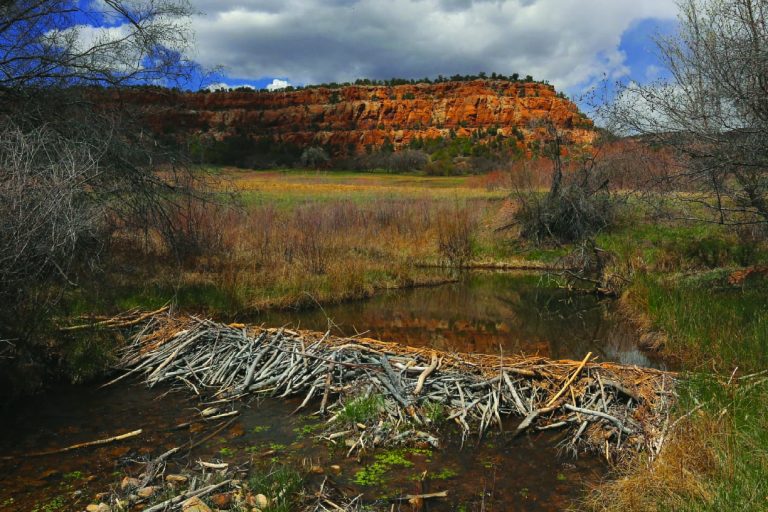
The desert stream flowed strong, cold, and clear against a backdrop of red rock massifs. Fed by springs high up on the Uncompahgre Plateau, every meandering bend held respectable rainbows and cuttbow hybrids willing to slam my hopper.
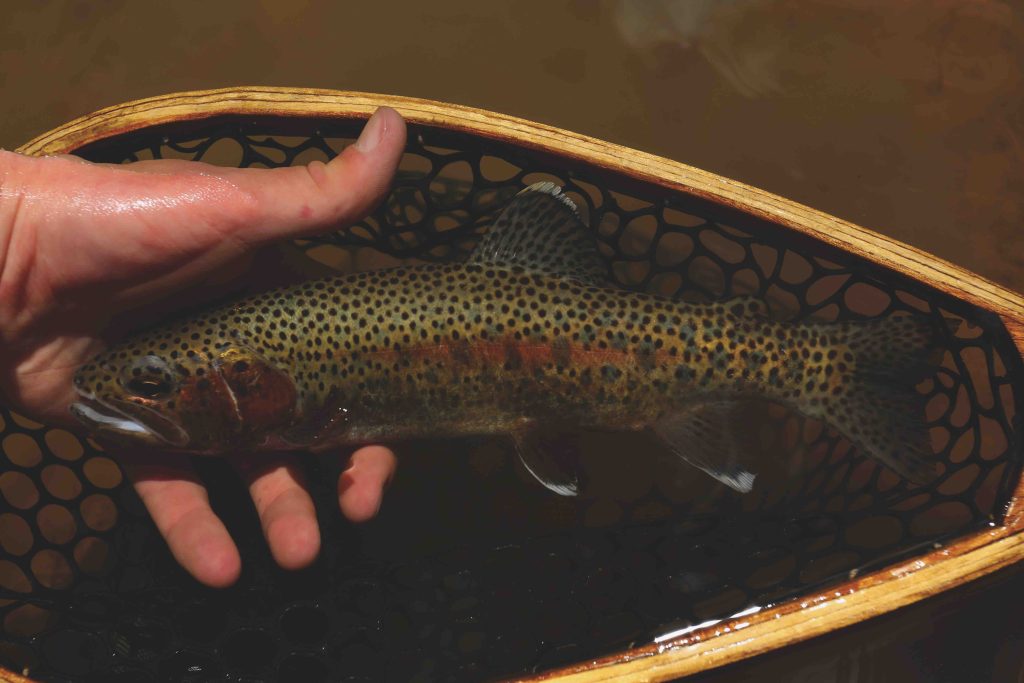
Wild Escalante rainbow
As I bushwhacked through a biome of cactus, red rock, and rising rainbows, one emotion stuck with me above all else: Gratitude. Not just for the fishing, but for the simple fact that a special place once locked up is now open for all of us.